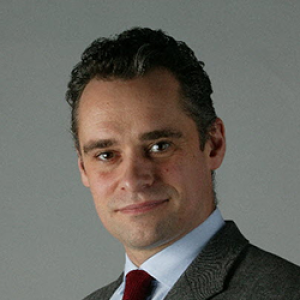
Man of the moment Riccardo Tisci's dark, sensual designs for Givenchy come straight from the heart, writes Jing Zhang.
- Thu
- May 23, 2013
- Updated: 9:29pm
Trending topics
Sponsored topics
Directors' privacy is a direct attack on the public interest
Unique personal identifiers are essential to corporate due diligence, bank credit checks and the exposure of corruption and fraud
Yesterday's South China Morning Post carried a full page petition signed by 1,768 journalists protesting against the Hong Kong government's plans to restrict public access to information about company directors.
I signed the petition not so much because the government's proposal is a blatant attempt to limit press freedom - although it is that. I signed because in trying to conceal crucial details like the identity card numbers of company directors, the government is guilty of a gross betrayal of its public duty.
To see why that is, and to understand why the government's explanation that it merely wants to "enhance protection of the privacy of personal information" is utter hogwash, we need to remind ourselves just what companies are and why they exist.
If you or I take out a mortgage to buy a flat and find ourselves unable to make the monthly payments, the bank that granted us the mortgage will come after us for its money.
It would start by repossessing our flat. But that's not all. If prices had slumped since our purchase, we might be unlucky enough to be in negative equity, with the value of our mortgage exceeding the current market value of the property. (Incidentally, if Hong Kong property prices fall by half from their present level, negative equity is exactly where tens of thousands of homeowners will find themselves.)
In that case the bank, or more likely its thuggish debt collector, would seize anything else of ours it could get its hands on - bank deposits, shares, car, jewellery and so on - until our debt and its costs were paid in full.
But if you and I were to set up a company to buy our flat, the story would be different. Most of the one million companies registered in Hong Kong are established as limited liability concerns. As a result, the bank would be allowed under law to seize only assets directly owned by our company. Everything else we own would be safe from its predations.
In short, the shareholders and directors of limited companies (and for most small private companies they are either the same people or the directors are close affiliates of the owners) enjoy privileged public protection should their companies run into trouble.
This protection is so important that when historians scratch their heads over why the industrial revolution and the explosion of wealth it produced took place in the relative backwater of western Europe rather than somewhere else with more obvious advantages, like China, they often conclude that the deciding factor was the development in Europe of limited liability.
With the assurance that their potential losses would be restricted to no more than the money they originally staked, investors proved far more willing to risk their capital in new business ventures. Today, limited liability is regarded as one of the cornerstones of a functioning economy.
But limited liability cannot be granted unconditionally. In return for the privileged public protection they enjoy, companies must divulge unique details about the identities of the directors they appoint. In Hong Kong that means either a local identity card number or a passport number.
This disclosure is crucial. Without unique identifiers, banks cannot do credit checks, business counterparties cannot conduct essential due diligence and - yes - journalists cannot expose fraud and corruption.
The disclosure of company directors' ID card or passport numbers is in the vital public interest. And it is nothing more than the necessary corollary of the privileged public protection limited liability companies enjoy.
In seeking to declare company directors' details secret, the government is directly attacking not only Hong Kong's public interest but also the foundations of its economy.
I can only conclude that our officials have something really big they want to hide from us.
After reading this article, people also read
11:08am
The lenders should require a higher collateral and higher lending rates if the mortgagee is a limited liability concern.
Knowing the identification of principals of these concerns in case of default is not a good argument. The law protects them from the harassment of creditors and collection agencies.
8:08am
1:27pm
What evidence do you have that the public does not support such a petition? Do you not think that this is yet another affront and slap to the face to the average member of the public by the controlling handful that own cartels, pull the strings of government and play by a different set of rules?
Curious how you so quickly jumped to their defense...
8:07am
7:32am
In Case You Missed It
Login
SCMP.com Account
or
Log in using a partner site
Log in using your Facebook account. What's this?
Don't have an SCMP.com account? Subscribe Now!


