
Our air quality won’t improve until this one thing happens
Cleaning up air pollution will require ‘relentless pressure’ on leaders in Hong Kong and the Pearl River Delta

A close mainland friend told me recently about his 21-year-old niece in Nanchang. Newly married, and seven months pregnant, she suddenly fell seriously ill. Perplexed doctors quickly discovered she had advanced stage liver cancer. She died before her baby was born, and the baby survived just a few days.
This appalling story provided the starkest of reminders of the undiscussed burden of China’s pervasive pollution. Except in the rarest of cases, people aged 21 should not get liver cancer. This comes as a result of years of overwork and wear and tear on your liver – often by drinking too much hard alcohol, but also as a result of someone suffering unrelenting assault from contaminated food and drink. Such deaths are common on the mainland and are a dreadful reminder of the invisible price paid for the industrial pollution that engulfs most of its cities. Being “manufacturer to the world” carries heavy and tragic costs.
In Hong Kong... it is easy to forget the relentless attritional impact on our health of the air we breathe and the pollutants we consume
A new study from the World Bank brings this awful reality into sharp focus. Focusing only on air pollution – mainly the microscopic particles of carbon, sulphates, nitrates and heavy metals that are pumped out by road vehicles, power stations in city communities, and by cooking fuels like coal, wood and dung in poor rural societies – the World Bank has concluded that one in 10 deaths worldwide are attributable to air pollution exposure – that is more than 5.5 million premature deaths due to pollution, out of an annual total of around 55 million deaths worldwide. That is six times more deaths than from malaria, and four times more than HIV/Aids. Of these premature deaths, over 1.7 million are in China, and over 1.5 million in India.
Most sobering of all, the welfare losses due to ambient and household air pollution cost our economies more than US$5.1 trillion in 2013. Foregone income from these premature deaths cost the global economy US$225 billion.
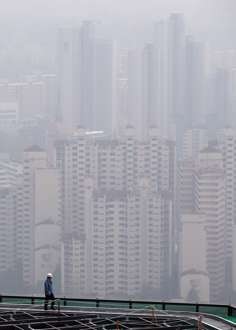
Around 70 per cent of the health-ruining pollution is accounted for in East Asia and South Asia, with the worst concentrations in north India and in north and central China, but no-one worldwide can rest easy. The World Bank says 87 per cent of the world’s population lives in areas that suffer pollution levels higher than the World Health Organisation’s air quality guidelines. Sitting as we do at the heart of the Pearl River Delta, you can be sure that we in Hong Kong sit right in the thick of it.
The World Bank work converges with findings from the University of British Columbia tabled at the American Association for the Advancement of Science earlier this year that found that “despite efforts to limit future emissions, the number of premature deaths linked to air pollution will climb over the next two decades unless more aggressive targets are set.”