NewBicycles are eating the lunch of China’s dominant car-sharing app
The number of bicycle-sharing users in China will more than double to 50 million by the end of 2017, from 18 million a year ago, according to a forecast.

Didi Chuxing last year beat the car-sharing business model’s pioneer Uber Technologies at its own game, and bought out the New York company’s China business to become the dominant app for hailing taxis or sharing a ride in the world’s most populous country.
Less than a year on, Didi’s dominance is being challenged by an unlikely source -- about 40 smartphone apps that have sprouted in major Chinese cities since late 2016 for commuters to share bicycles.
Yes, bicycles. The two-wheel conveyance has become the most popular means of last-mile transportation from subway stations and bus terminals to final destinations. Users can pick them up anywhere, leave them anywhere, often for as little as 1 yuan per hour, sometimes for free, and occasionally -- depending on promotions -- receive cash prizes.
The change in transportation means monthly savings of 500 yuan (US$73), about 5 per cent of the salary of Freddie Tian, who works at an office in Futian district in Shenzhen.
He’s taken to using the city’s subway again, as the easy availability of shared bicycles lets him cover the 10 minutes from his apartment to the subway with ease. Formerly a frequent Didi user, Tian said he no longer takes the taxi.
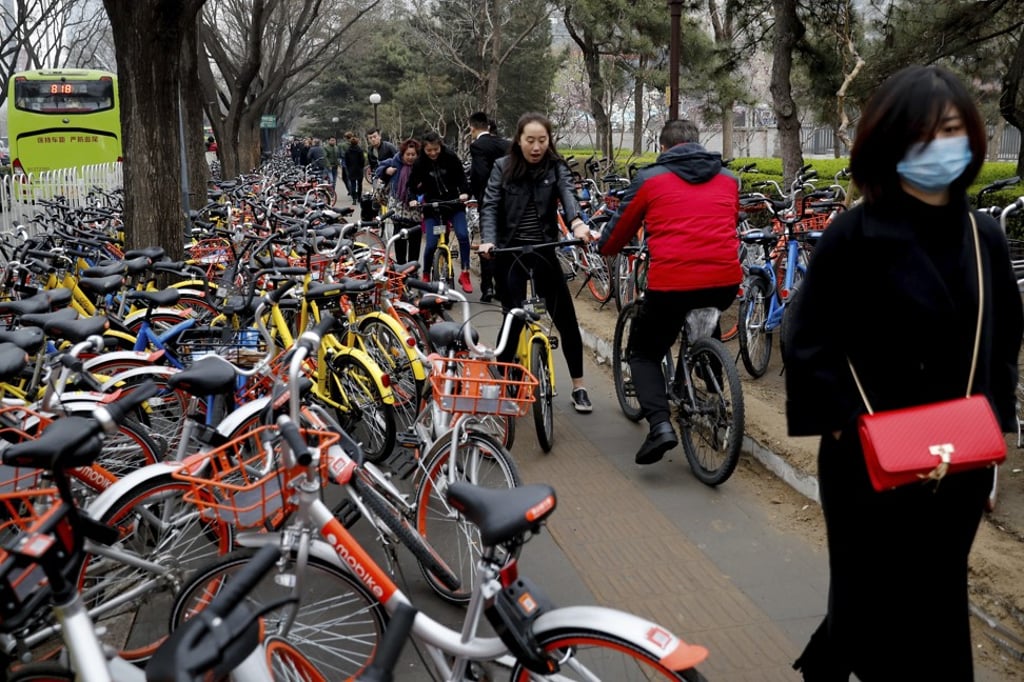
Tian is hardly alone in ditching taxis or shared car rides for the bicycle. Bicycles as a mode of transportation has doubled to 11.6 per cent of total transportation within a year, from 5.5 per cent, while the ratio by cars has fallen to 29.8 per cent from 26.6 per cent in the same period, according to an April report by Beijing Mobike Technology Co. and Tsinghua University.