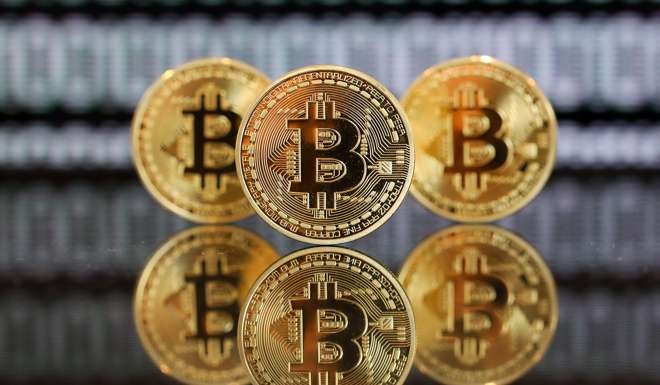
A dramatic rally in digital currency bitcoin came to a spectacular end on Thursday with a plunge of up to 20 per cent as China’s yuan rose sharply - further evidence of an intriguing inverse relationship between the pair.
Bitcoin had gained more than 40 per cent in two weeks to hit a three-year high of US$1,139.89 on Wednesday, just shy of its all-time record of $1,163 on the Europe-based Bitstamp exchange . But it dived as low as $885.41 on Thursday as the yuan jumped by over 1 per cent in offshore trading and headed for its strongest two-day performance on record.
Chinese exchanges have reported high volumes of trading of the web-based “cryptocurrency” over the past year, during which time the yuan has shed almost 7 per cent, its worst annual performance since 1994, while bitcoin has surged 125 per cent, outperforming all other currencies for a second year in a row.
Bitcoin can be used for moving money across the globe quickly and anonymously, and operates outside the control of any central authority. That makes it attractive to those wanting to get around capital controls, such as in China, and also to investors who are worried about a devaluation in their currency.
“Given that the yuan’s weakness over recent months seemed to correlate with bitcoin’s strength more than any other currency, it’s no surprise that bitcoin traders have reacted the way they have to the yuan’s sudden strength today,” said Paul Gordon, co-founder of London-based Quantave, a firm seeking to make it easier for investors to access digital currency exchanges.