
Macroscope | Central banks have issued their ‘amber alert’
‘The trouble is the central banks are between a rock and a hard place and being driven into action for the sake of being seen to be in control’

Ever pinched yourself and wondered whether you are living in some kind of bizarre universe of distorted perceptional reality, but fearing it is all going to end in tears? It seems like that now. The central banks appear to have it all sorted, the global economy is bouncing back, risk assets are booming and market fear gauges like the VIX volatility index are saying there is no need to fret.
It may not be Nirvana but it feels a darn sight better than the disaster-zone of the 2008 crash when all was collapsing around everyone’s ears. Households, companies and investors were staring into a hole and the central banks stopped us tripping over the precipice. It feels a whole lot better now, safe in the knowledge that we are back on the road to recovery rather than the road to wrack and ruin.
The world’s policymakers are flying blind and it looks like mission impossible
Or maybe it is just a trick of false consciousness - we have been looking “through a glass darkly” for so long we have ended up seeing life through rose tinted spectacles. We are just about keeping our heads above water and chanting our inner mantras that “we are OK!” Governments might have let us down, hitting us with austerity cutbacks, but at least the central banks have our backs covered, have they not?
Central banks must have a great advantage as they perceive the fabric of the real world that the ordinary man in the street never gets to see. They can see the potential fractures in the global economy, spot the toxic dangers in the financial system and take appropriate action according to the world as they see fit. These are the best of the world’s monetary brains after all.
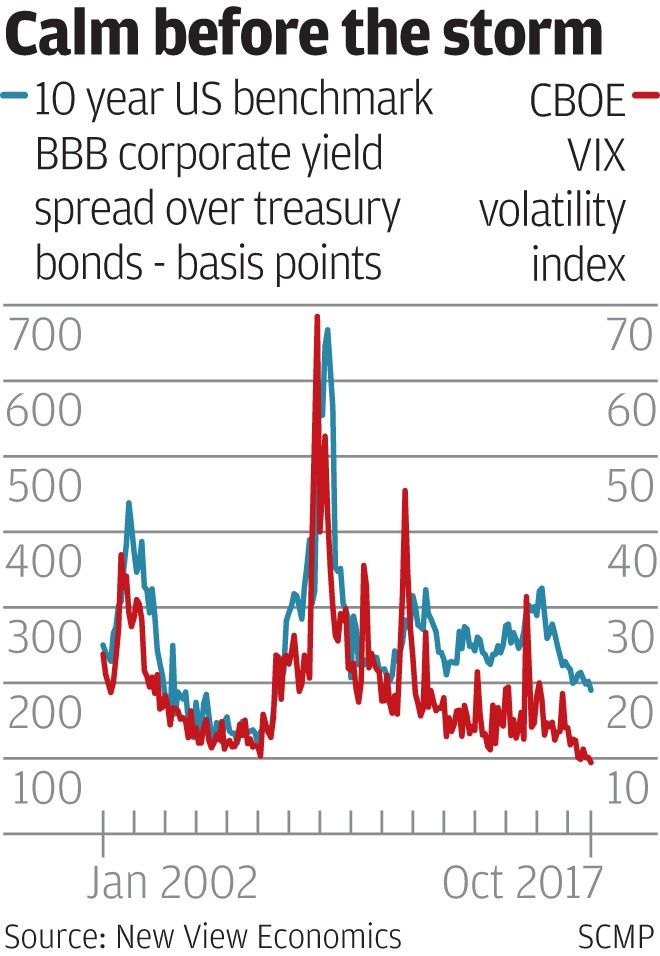
So it must be looking good, as super-loose monetary policy seems to have peaked and central banks are “talking the talk” and “walking the walk” for normalisation and tighter policy ahead. The US Federal Reserve has been doing this for nearly two years now, the European Central Bank has just started its taper and the Bank of England poised on “amber alert” for higher rates. Even the Bank of Japan is in wait-and-see mode.
The trouble is the central banks are between a rock and a hard place and being driven into action for the sake of being seen to be in control. Yet whatever they do has the same result – global borrowing costs are going up. If they do nothing, inflation expectations will rise and yields will push higher. If they tighten policy, then yields will still push higher. They are in a no-win situation.