Sink or swim. Hong Kong lenders must get smart with virtual banks as fintechs snap at their heels
Virtual banking providers will have to consider three factors to thrive – provide a seamless experience, offer products tailored to customer needs and a secure source of balance sheet funding that supports growth

As one of the premier international financial centres in the world, Hong Kong has a well-established and developed banking system. But despite the size of the financial industry and the presence of branches in every corner, customers are among the least satisfied with banking services in the world. That’s a challenge for bank management teams.
Accenture research last year showed only 53 per cent of Hongkongers enjoy the overall service they receive from banks, much lower than the 88 per cent of people in the United States, 78 per cent in the United Kingdom or 72 per cent in Australia. Faced with such a high level of customer frustration and increased competition from fintech start-ups and internet giants, banks have invested billions of dollars in recent years to move large parts of their business into the digital age, gaining speed and more insight about their clients’ needs with apps that handle just about anything, from bill payment and stock investing, to credit card rewards and money transfers.
What the C-suite at banks are being asked to look at next to fend off competition from fintechs and improve customer service is the launch of so-called branchless, or virtual banks.
Virtual banks are nothing new, with services launched in Brazil, Poland, the UK, US and other countries in the past few years. They have been possible in Hong Kong since 2000, when the Hong Kong Monetary Authority (HKMA) issued guidelines for the implementation of those services. There was only one licensed bank that made the move to change into a virtual bank, though it later aborted the transformation and since then no one launched anything similar, according to the Financial Services and the Treasury Bureau.
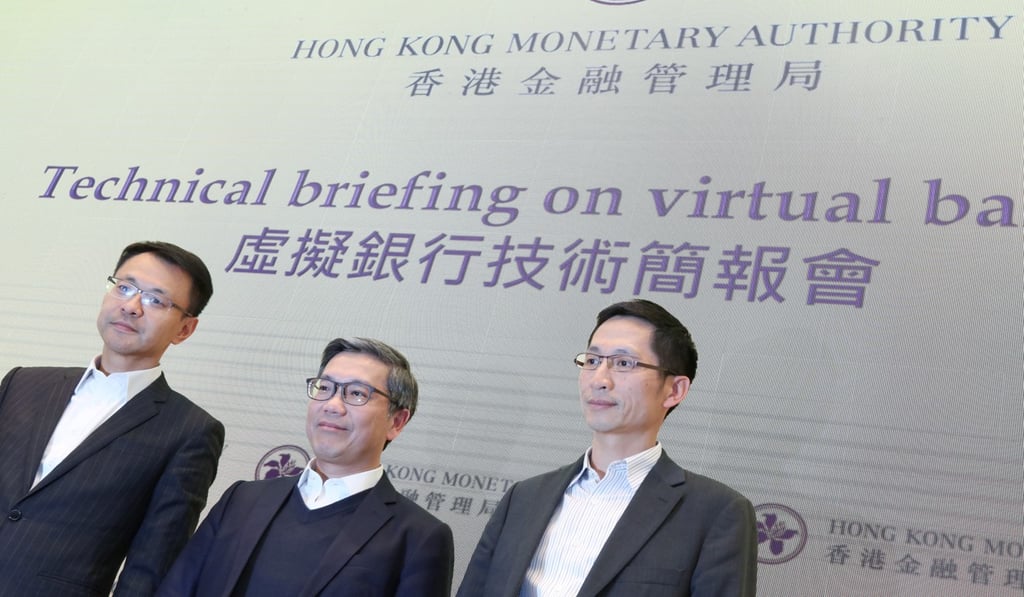
That should change this year. In September 2017, the HKMA launched a series of “smart banking” initiatives to help the city capture the huge opportunities created by the convergence of banking and technology. One of the proposals was to promote virtual banks and revamp the rules to make it more attractive for financial firms to offer services without a physical presence. That was a big shift for the HKMA, whose stance previously was that it just wouldn’t object to them.