Tax changes needed to help boost ‘Greater Bay Area’ plan, says PwC
Different economic structures among bay area region cities means Hong Kong should look to reduce the tax burden to encourage business ties

The Hong Kong government should improve tax policies to attract further talent and capital and help companies benefit from the “Greater Bay Area” plan, according to PricewaterhouseCoopers.
“Cooperation among the 11 cities in the Bay Area means we separate each other among different roles,” Agnes Wong, a partner in tax services at PricewaterhouseCoopers in Hong Kong said on Wednesday. “Because the major industries in Hong Kong are in the service and finance sectors, we need to supplement the other cities [in order] to remain an attractive destination for foreign direct investment.”
“Singapore is a big competitor as a headquarters for MNCs [multinational corporations],” Wong added. “We need to attract more funding, capital and people to make use of the other cities in the bay area.”
First proposed in 2011, Beijing hopes the bay area, or Guangdong-Hong Kong-Macau Greater Bay Area as it is officially known, will provide an engine of growth for China’s economy. The area is similar to the deltas in Tokyo and New York.
Consisting of 11 cities in southern Guangdong province, plus Hong Kong and Macau, some estimates place the combined economy of the region at US$3.6 trillion by 2030, making it the fifth largest economic zone in the world.
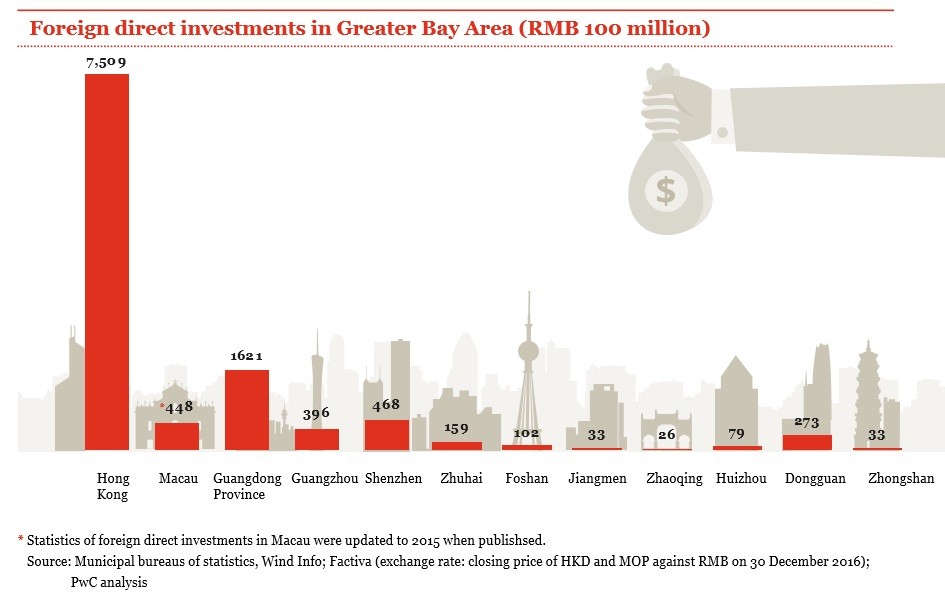
PwC recently submitted an advocacy paper to the Hong Kong government on policies that could benefit companies and individuals who do business in the basin.