When will consumers in Hong Kong ditch their wallets for the mobile version?
The city’s mobile payments transaction value is less than 0.5pc of China’s, while its infrastructure, regulation and consumer readiness lags Singapore

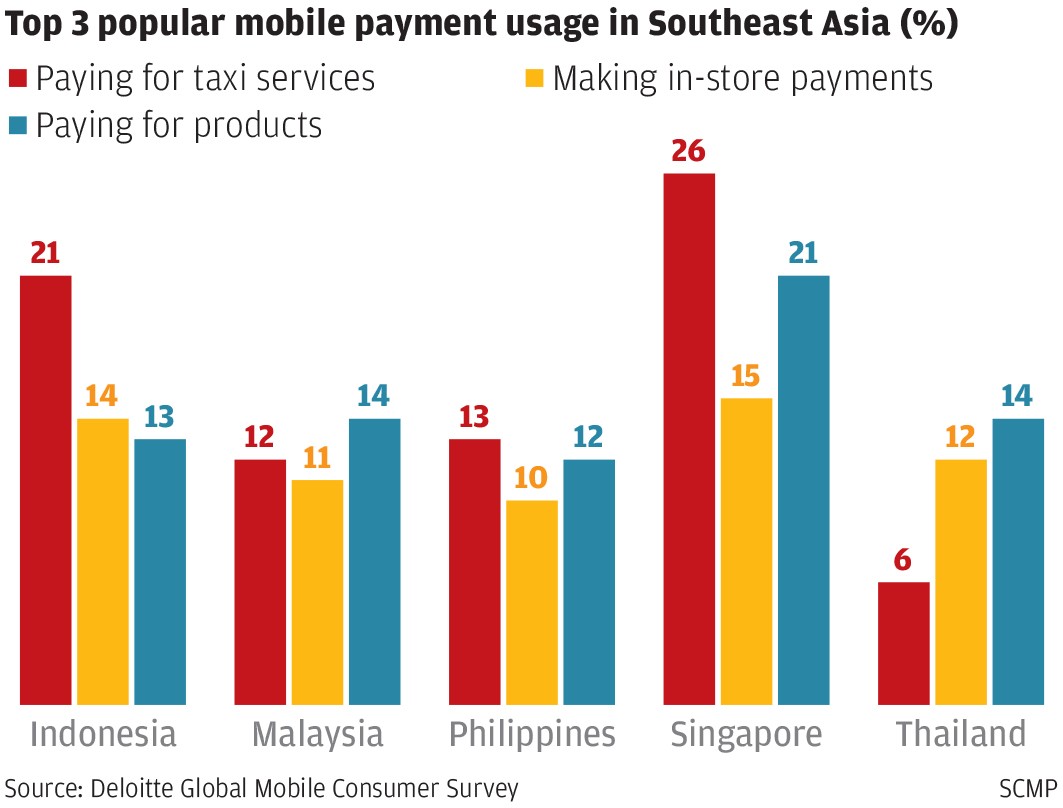
Three to four times a week, Stephanie Lui orders a car on ride-hailing app Grab to take her home from work in Singapore. Instead of paying cash, she pays for her rides using prepaid credits in her GrabPay mobile wallet because, for her, convenience is all that matters.
“I don’t have to think about whether I have enough cash for my ride,” said Lui, who works in the banking industry.
She made the switch from using credit cards to GrabPay during a promotion period, when the app operator would have spent aggressively on marketing and big subsidies on rides to attract customers.
Lui is just one of thousands of Grab users in Singapore who use GrabPay regularly. According to Jason Thompson, head of GrabPay, 80 per cent of Grab’s users in Singapore are going cashless and using it as the primary payment method for their rides.
GrabPay, which initially only worked for payments within the company’s ride-hailing ecosystem, has since introduced more features, such as fund transfers between Grab users. Users will also soon be able to withdraw money from their bank accounts, said Thompson.
“We want to allow customers to move their money around ... it’s important that users do not feel that their money is trapped [in the wallet],” Thompson said.