China and Hong Kong stocks slide, with Shanghai Composite Index declining to two-year low
Cut in reserve requirement ratio announced on Sunday by People’s Bank of China ‘doesn’t signal a shift in monetary policies’, as the central bank ‘continues to focus on deleveraging’, say analysts

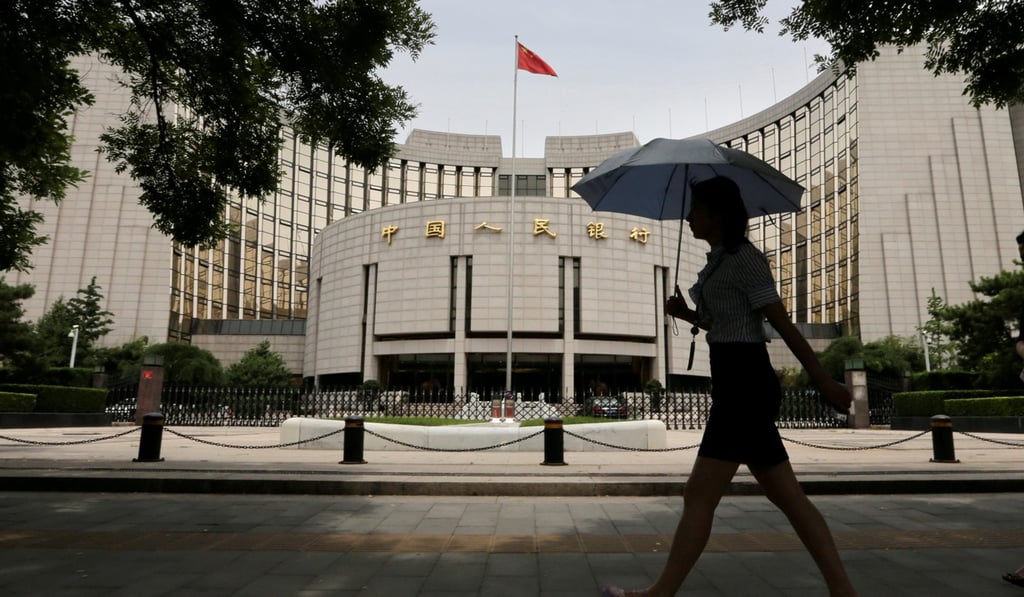
Hong Kong and mainland China stocks declined on Monday, after a cut by the People’s Bank of China in the amount of cash commercial banks must put aside as reserves was viewed as inadequate to stem losses on equities held back by the US-China trade war and deleveraging.
The Shanghai Composite Index retreated by 1.1 per cent, or 30.42 points, to 2,859.34, its lowest close since June 2016. The sale of mainland equities by overseas investors through the exchange link with Hong Kong touched in a four-month high on Monday. Foreign investors sold a net of 3.7 billion yuan (US$565.7 million) worth of mainland-listed shares, the most since February 6, according to Bloomberg data.
The cut in the reserve requirement ratio … shouldn’t be interpreted as a one-way and all-out loosening of liquidity
In Hong Kong, the Hang Seng Index was down by 1.3 per cent, taking the city’s stock benchmark to a level not seen since December 2017.
The Chinese central bank’s decision on Sunday to lower the reserve requirement ratio by half a percentage, releasing 700 billion yuan (US$107.1 billion) into the market, cannot be viewed as the authorities boosting liquidity or paring down deleveraging, according to Shanghai-based brokerage Shenwan Hongyuan Group and Fidelity International. Five hundred billion yuan released from the cut will support debt-to-equity swap programmes, and the remaining 200 billion yuan will be used to aid the funding of smaller businesses, the PBOC said in a statement.
“The cut in the reserve requirement ratio doesn’t signal a shift in monetary policies, given the specific purpose of how the released capital will be used,” said Xie Yunxia, an analyst at Shenwan Hongyuan. “It shouldn’t be interpreted as a one-way and all-out loosening of liquidity.”