Advertisement

Across The Border | Beijing-Seoul tensions over missile defence system won’t hurt South Korean economy for long, analysts say

Similar experiences from Taiwan and Japan show that the impact from boycotts of travel tours and consumer goods are short-lived, analysts say

Reading Time:3 minutes
Why you can trust SCMP
Lotte shops in mainland China were shut as the tensions between Beijing and Seoul escalated. Pictured is a Lotte store in Lianyungang, Jiangsu province on March 7, 2017. Photo: AFP

The South Korean economy looks poised to take a blow from the diplomatic row over the deployment of a US missile defence system on the Korean peninsula, but the overall impact will likely be short-lived, based on similar experiences from Taiwan and Japan, analysts say.

Anti-South Korean sentiment has flared up in China, after the US began shipping the Terminal High-Altitude Area Defence (THAAD) system to South Korea last week to counter Pyongyang's missile capabilities. Beijing has criticised the deployment of THAAD a threat to its “security interests”.
Advertisement

“Beijing views the planned deployment as a kind of betrayal by South Korea and potentially the first significant step toward the creation of a bigger missile defence system involving Japan to contain China,” said Kevin Lai, an analyst for Daiwa Capital Markets, in Hong Kong.

Travel curbs imposed by Beijing could have a negative impact on the South Korea economy, he added.
Advertisement
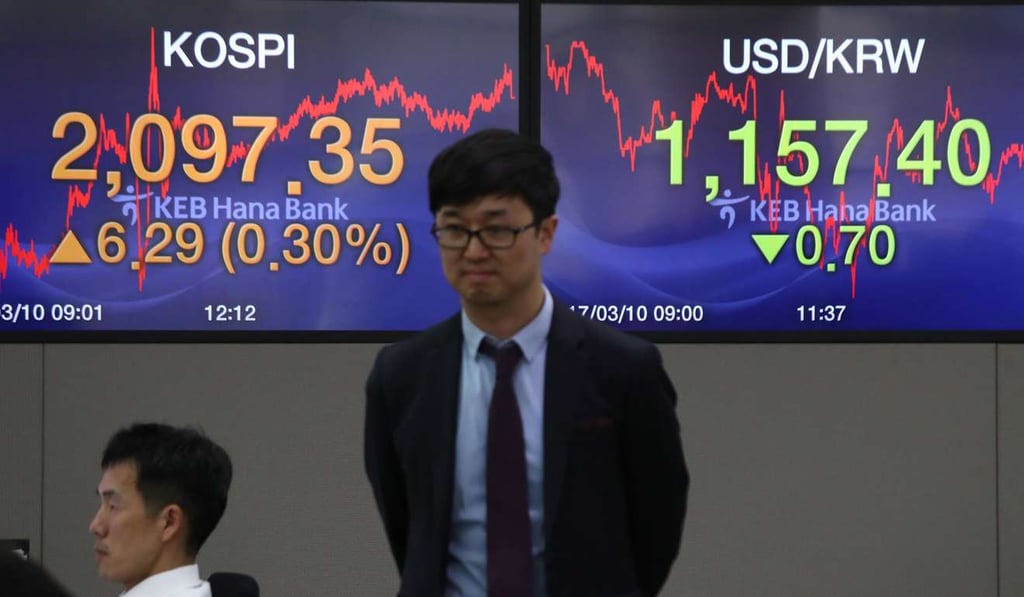
South Korea’s benchmark Kospi index ended 0.3 per cent higher on Friday, as investors shrugged off concerns over worsening bilateral relations with China. Photo: EPA
Advertisement
Select Voice
Choose your listening speed
Get through articles 2x faster
1.25x
250 WPM
Slow
Average
Fast
1.25x