New | Hong Kong should add global stocks for mainland investors to trade, SFC’s Tong says
Hong Kong could enhance the attractiveness of the bourse by adding global stocks to its Connect schemes and cracking down on so-called con stocks, SFC’s chairman Tong said.

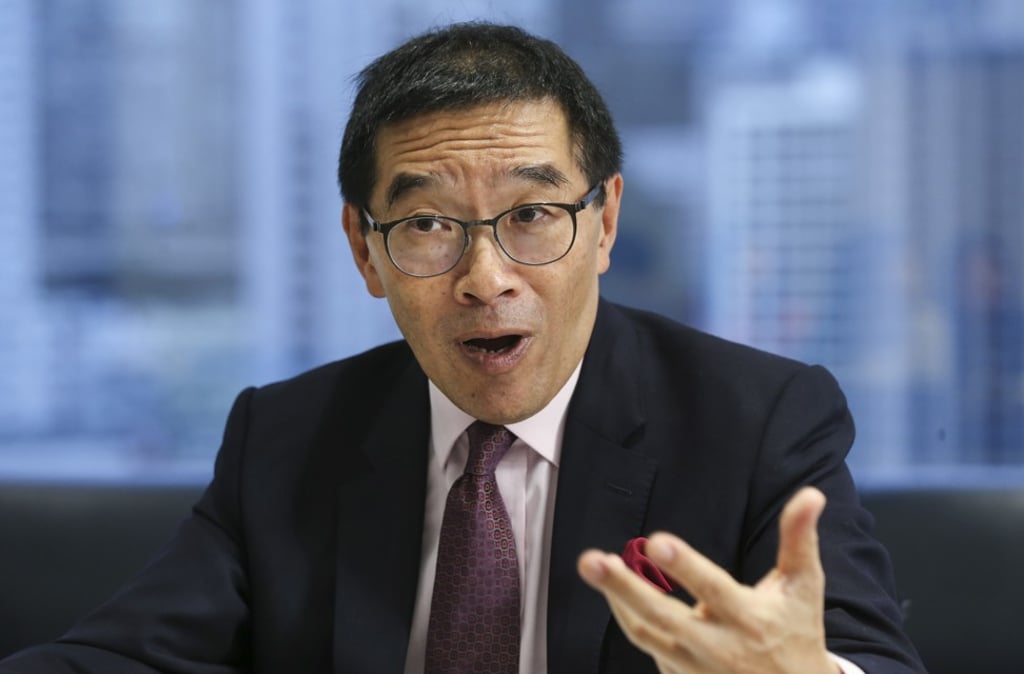
International companies that have raised capital on Hong Kong’s stock exchange should also be available to mainland Chinese investors under the city’s so-called Stock Connect schemes, said the Securities & Futures Commission’s chairman Carlson Tong Ka-shing.
“An item on my personal wish list is for Beijing to consider adding the international companies that are listed in Hong Kong to the Connect schemes for mainland investors,” Tong said in an interview with the South China Morning Post. “If mainland investors, who now represent 10 per cent of Hong Kong’s market turnover, can be allowed to buy and sell international stocks, it will attract more overseas firms to list here to capture the mainland capital.”
Italian fashion brand Prada, the UK’s insurer Prudential PLC, and Russian aluminium smelter Rusal are among the international companies that have raised capital in Hong Kong and have their shares listed on the city’s bourse. But they are not among the 880 of Hong Kong-listed stocks selected for the Stocks Connect scheme, which allows Hongkongers to trade stocks on the Shenzhen and Shanghai exchanges, and vice versa.
While Hong Kong remained the world’s largest destination for initial public offerings (IPOs) with US$19.4 billion raised in the city last year, 69 per cent of the fundraising was by financial firms while only three technology companies raised capital here. Hong Kong needs to create a new board with different listing rules and qualifying criteria to enable technology companies, as well as sovereign firms like Saudi Aramco to raise capital here, analysts and consultants said.
Hong Kong is competing with global exchanges like New York and London to attract Aramco -- the oil company owned by the government of Saudi Arabia -- to list its shares, estimated at US$100 billion for a 5 per cent stake.