Will China follow the Fed in ‘normalising’ monetary policy?
Last week, Sun Guofeng, director general of the Financial Research Institute, said emerging economies should start to normalise their monetary policy and exit from making monetary stimulus measures

China’s central bank is expected to tighten its monetary policy in close step with the US Federal Reserve, which some analysts say could create headwinds to its economic growth as well as add more risk to its financial markets in the coming year.
Traders have now mostly priced in a potential interest rate increase by the Fed at the conclusion of its two-day policy meeting this week.
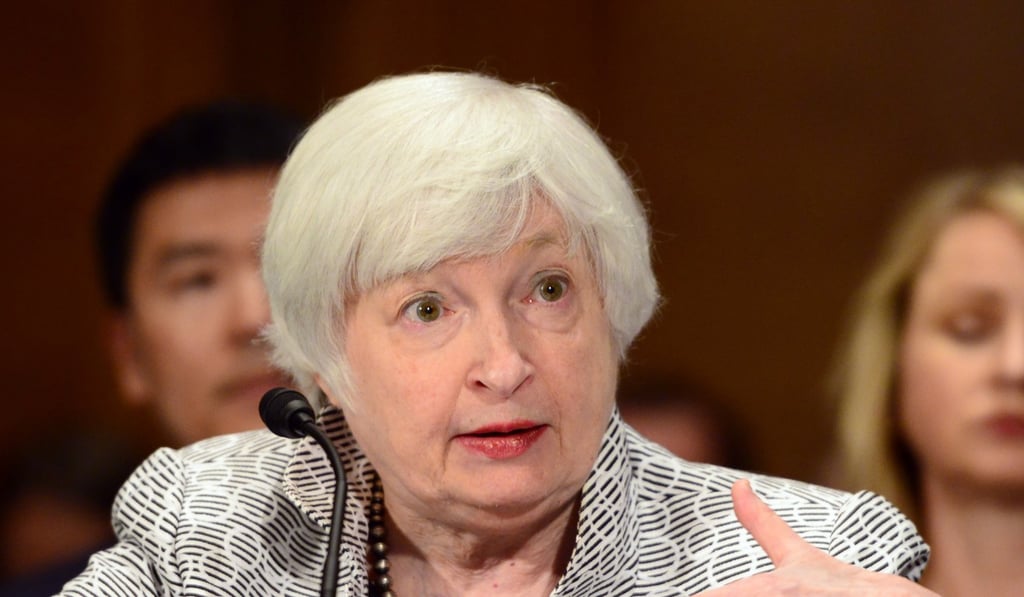
But markets are still closely watching chairman Janet Yellen’s remarks for clues on the outlook of the economy and monetary policy stance for next year.
In response to the US’s normalisation of monetary policy and in line with its efforts to curb risky lending to its financial sector, the PBOC may now lift rates on its reverse repurchase agreements (repos) or the rate on its medium-term lending facility in the coming months, analysts said.
While the People’s Bank of China has kept its one-year lending rate unchanged at 4.35 per cent for two years, it has been tightening financial conditions by adjusting its liquidity management tools and implementing macro-prudential, deleveraging regulation since end-2016.
Last week, Sun Guofeng, director general of the Financial Research Institute, said that emerging economies should start to normalise their monetary policy and exit from making monetary stimulus measures, such as so called quantitative easing – in which a central bank government securities or other securities from the market to lower interest rates and increase money supply – introduced during the financial crisis.