My Take
Saturday, 16 February, 2013, 12:00am

A little knowledge is a useful thing

BIO

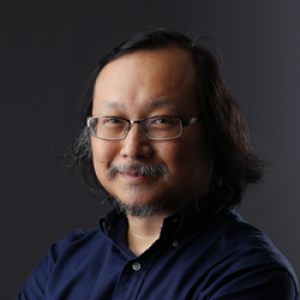
Alex Lo is a deputy news editor at the South China Morning Post. He also writes the daily “My Take” column on page 2 and edits the weekly science and technology page in Sunday Morning Post.

Recommended on Facebook

Lifestyle

Though ubiquitous, the origin of cosmic rays has never been...

Luisa Fietta is one of those rare women who oozes style in a...

To get some measure of how good the skiing is in Verbier you...

The grim winter weather and the perpetual thick smog have not...

Ben Affleck’s Argo was crowned best film at the Baftas on...

We may think the more we know about something, the stronger the opinion we have. It's the opposite.

It's far easier to be highly opinionated on topics about which you know only a little. That is the conclusion of many psychologists who have studied these things.

I should know. I write a column that ranges over many topics on which I cannot possibly claim to be expert.

That means being a jack of all subjects and a master of none. It may actually be harder to write a short summary on a subject on which you are truly an expert.

This is my more charitable interpretation of why many local university scholars are reluctant to talk to the media - they do not think a sound bite could possibly explain a complicated issue.

The propensity to take a strong stance on issues we know little about is probably wired into our psychological make-up.

This is what Daniel Kahneman, the Nobel Prize-winning co-founder of heuristics and biases, a branch of psychology that underpins behavioural economics, says in a chapter called "A machine for jumping to conclusions", in his book Thinking Fast and Slow: "You will find that knowing little makes it easier to fit everything you know into a coherent pattern."

This sentence hit me like a brick when I first read it.

Let's read the whole passage describing a classic experiment: "Participants who saw one-sided evidence were more confident of their judgments than those who saw both sides. This is just what you would expect if the confidence that people experience is determined by the coherence of the story they manage to construct from available information. It is the consistency of the information that matters for a good story, not its completeness."

This has enormous political implications and applies to practically every big public debate, say, national education and mainlanders' invasion of Hong Kong; Tibet and Chinese authoritarianism; deficit reduction and drone assassinations in the US. What about the eternal debate about democracy that must rely on public opinion to govern and elitist authoritarianism that favours the opinions of experts?

Kahneman's book is so profound yet easy to read. That's the unmistakable sign of an expert and master thinker.

Comments

darrylcbg
I don't agree that people who have degrees are unable to express themselves concisely. I don't think that's the problem. I think the problem is one of having the confidence or caring to express your views in order to inform and contribute to society.
jkhleung
@darrylcbg: The incessant sound bites of the same few so called academics expressing their views on democracy and what the govt has done wrong frankly make me cringe! I'd rather they didn't share their wisdom like a broken record. They're shallow and sometimes hollow. "The propensity to take a strong stance on issues we know little about is probably wired into our psychological make-up."
johnyuan
I am not sure we’re wired to take a strong stance on issues we know little about is all true. On the contrary it is a learned ability. The more one is exposed to different disciplines and thoughts as a liberal art education can offer, the more insightful one become by connecting the dots. Often times the insights are enjoyable and useful. In a few professions, in fact, their training is to be generalist not specialist – conductor of a symphony or an architect. For the latter, Mattew Frederick, an architect once commented that, “An architect knows something about everything. An engineer knows everything about one thing.” So we need both at least to do a good architecture.
Since many universities in Hong Kong are either outright owned by government or rely on government grants, academic freedom for social (including housing) issues are much a suspect. I don’t expect there will be a change in some of the academics who in the long run if not as recently seen are indeed shallow and hollow. One advise to the government and society that beware of false security one perceives in what comes out of those from the institutes for higher learning. I don’t.
johnyuan
Your conclusion, “Kahneman's book is so profound yet easy to read. That's the unmistakable sign of an expert and master thinker.” Seems to make a point that applies to your column more than what Kahneman said about himself (if any) or his theory in his book. I believe too that consistency makes a story comprehensible therefore acceptable. In architecture, often it is also a tool and yardstick to evaluate a design – unfortunately it doesn’t guarantee beauty as often in the hands of the lesser talent. More, there is a difference between the silence of a wise man sitting in a cave who knows too much and those who really knows too little especially existing in an academic campus.

Login

SCMP.com Account

or