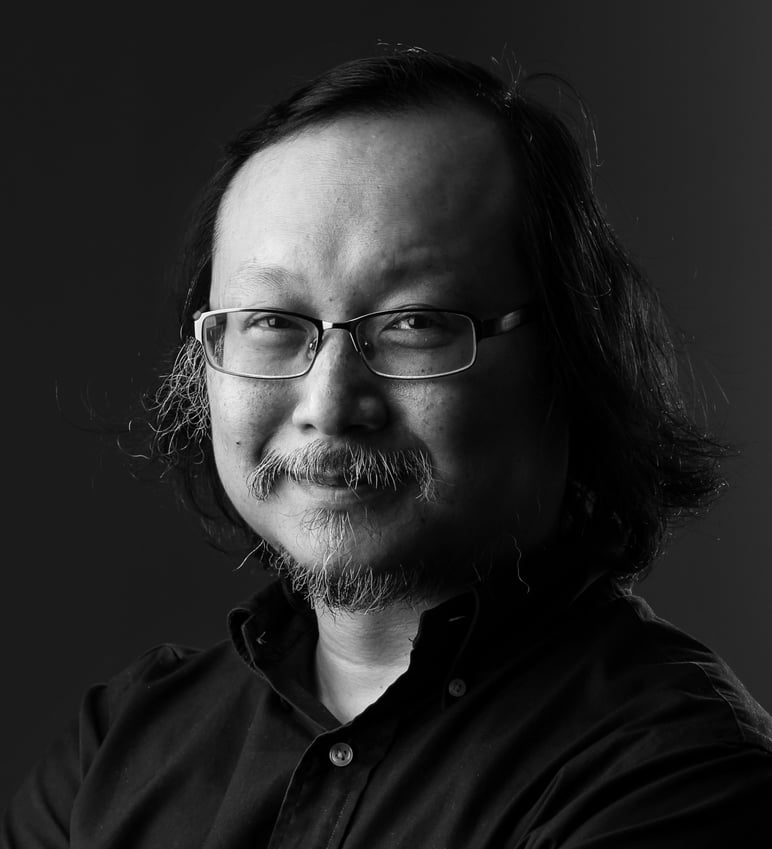
Man of the moment Riccardo Tisci's dark, sensual designs for Givenchy come straight from the heart, writes Jing Zhang.
- Thu
- May 23, 2013
- Updated: 5:56am
Trending topics
Our democracy offers flaws for thought
Is Hong Kong a flawed democracy? According to the 2012 Democracy Index, we are. The phrase is an oxymoron if ever there was one. But perhaps this is what democracy has to recommend itself: it is always flawed, but rarely catastrophically, unlike dictatorships and authoritarian regimes. You can certainly have successful and enlightened non-democratic regimes, but when they go bad, they can be really bad. We have all heard that old chestnut from Churchill about democracy being the worst form of government except for all the others.
The annual index run by the Economist Intelligence Unit divides governments around the world into full democracies, flawed democracies, hybrid regimes and authoritarian regimes. We were previously hybrid but have moved up to flawed democracy.
The improvement was attributed to an increase in the influence of the general public over last year's Legislative Council and chief executive elections. More than half of all legislators are directly elected, the index says, and the chief executive race was more open to influence from public opinion.
But the index warns that Beijing has a heavy influence on the chief executive election and that the city is held back by functional constituencies in the legislature that represent powerful special interest groups. The boroughs are certainly rotten here, but special interests pretty much define most democracies. The EIU is part of the group that owns the conservative weekly The Economist, which is hardly politically neutral.
Taking freedom in the broadest and most general sense, do you seriously think we are less free in Hong Kong than those top "full democracies" like Norway (1), Sweden (2) and Iceland (3), and those lower down like Britain (16) and the United States (21)? Shivers went down my spine whenever I was approached by cops in the US and Canada. Let's just say Asia's finest are a lot more approachable and non-violent.
But the index does point to something important. We in Hong Kong are always looking to Britain and the US as models of democracy. Perhaps countries in northwestern Europe and Scandinavia, given their small size, welfare services and humane policies, offer a much better guide.

Share
- Google Plus One
-
12Comments
After reading this article, people also read
9:22pm
Autocratic political system could score anything between 0 to 100 depending on who the leader is.
I'll give a score of 10 for chairman Mao during the cultural revolution.
And a score of 90 for chairman Deng.
A score of 70 for the present chinese govt.
1:46am
Since there are no longer supreme leaders as Mao and Emperor Huizong, there is no reason to believe the N number of leaders cannot complement each other, given the fact that every person has its own set of knowledge that he/she can bring to the table, weaknesses and strengths. This is what we do in a large collaboration anyway. It makes sense.
5:15pm
I'm a scientist in a huge collaboration. Not everyone has experience and the knowledge powerful enough to be a leader. We select based on who's the most capable or "smart", not based on showmanship debates. And we don't have a one man one vote thingy. It would be a disaster if students who have little knowledge go to vote for our collaboration director.
So, I don't understand why a person with better showmanship can be better than a person who is really capable or knowledgeable. And I just don't understand how anyone who does not understand the company or the organisation at large can select their, CFO, CEO or their coordinators or leaders. Unless they have the required professional knowledge, they should not "distort" the result.
8:15pm
Like you, my earlier career was in the ivory tower, then R&D, then was rotated through most functional areas in business and finance.
China's past meritocracy benchmark in dynastic succession became ossified, which eventually thrusted the nation onto the precipice of survival for over a century. Present PRC regime has evolved from dictatorial tyranny -- perhaps then a necessity for survival - into corporate like meritocracy with "scientific intent." By that I mean a trial-and-error, objective function oriented optimizaion approach to socio-economic problem solving.
No nation in history to my knowledge had the government power and organization knowhow to attempt such a grand experiment until now. Will this political brave new world play the key role in the evolution of human civilization?
The outcome is uncertain. But I hope for the best.
3:55pm
All dynasties decline and fall because no one can ensure that their children are always better than them or better than other officers and commoners. The Duke of Zhou example should have been a wake-up call for so many dynasties that follow, but it did not. In any case,
I hope for the best, and in your endeavour too. I am glad we have another R&D fella around.
12:12am
A friendly correction to your misunderstanding. Scientists are generally quite open-minded with their specialized fields, though they are just as vulnerable in political and social dialogs when they do not apply the scientific method.
CN Yang's gauge theory is most beautiful. It was generalized from the theory of light and electrons (quantum electrodynamics) to unify strong, weak and electromagnetic theories. Many accepted its beauty but couldn't buck the facts. Except for photons, all physical particles have mass. Symmetry breaking discovered by Nambu is another principle needed to realize Yang-Mills gauge in full glory. Only the great Wolfgang Pauli showed less than gentlemanly behavior when young Yang gave a seminar then. The Yang-Lee personal dispute is something I don't want to go into here.
Einstein's theories were actually quite well received. Except for some racist experimentalists who couldn't understand them, among them one Johannes Stark, whose eponymous effect won him a Nobel. He called Relativity Jewish physics.
Racists could be geniuses too. Wagner denigrated Jewish cultural contribution in his Judentum in der Musik. Yet few could deny that he is the greatest composer in the Romantic era.
Closer to home, we must deal with expats and bananas disparaging Chinese children as capable only of rote learning. This myth harms their employability and imposes a glass ceiling in their careers.
8:30pm
I see rote learning happening around the world wherever I go. When I ask people if they know why they are doing this or why they want to pursue that, those not using rote learning are those who usually know their passion or have an objective vision of the future they want to chase after, and are not afraid to fall down. People also can't blindly chase after paper degree.
8:06pm
In my decade as a college teacher, I had never given a single closed book test to my students. They were all welcomed to bring in any books and peruse to their heart's desire while answering all questions within the allocated time.
Readers of this column mouthing vacuous platitudes about Democracy are likely to flunk in exams given by me. Why? Because they usually demonstrate no aptitude for critical inquiry.
That said, memorization facilitates bandwidth in thinking. By that I mean the speed needed to sieve through with reasonable scope and depth on a computation or issue. However, such "rote" learning meant for speed is best to go hand in hand with a thorough understanding of the material, though not enough yet to challenge the fundamental principles at hand.
Hong Kongers' obsession with brand name schools and diplomas is an impediment for learning.
9:19pm
Like you, my earlier career was in the ivory tower, then R&D, then was rotated through most functional areas in business and finance.
China's past meritocracy benchmark in dynastic succession became ossified, which eventually thrusted the nation onto the precipice of survival for over a century. Present PRC regime has evolved from dictatorial tyranny -- perhaps then a necessity for survival - into corporate like meritocracy with "scientific intent." By that I mean a trial-and-error, objective function oriented optimizaion approach to socio-economic problem solving.
No nation in history in my knowledge had the government power and organization knowhow to attempt such a grand experiment until now. Will this political brave new world play the key role in the evolution of human civilization?
The outcome is uncertain. But I hope for the best.
9:26am
Pages
In Case You Missed It
Login
SCMP.com Account
or
Log in using a partner site
Log in using your Facebook account. What's this?
Don't have an SCMP.com account? Subscribe Now!


