Uber's rabble-rousing tactics mean its days in Hong Kong and mainland China are numbered
Robert Boxwell is unimpressed with their way of doing business, and says the 'petitions' in Hong Kong and elsewhere will come back to bite the company

After seven Uber drivers were arrested and its Hong Kong office was raided, the company sent a link to a "petition" through its app to its Hong Kong customer base. Within days, democracy showed its power, with more than 50,000 people signing what essentially looks like an Uber Hong Kong group hug. The petition thanked Uber users for their "Uberlove", but didn't really demand anything.
I wrote last month that Uber will never make it in mainland China. Organising their Hong Kong customers to sign a petition is one more nail in Uber's China coffin. Uber is Twitter on wheels, and the petition seems more like Occupy Central than a smart business move.
Uber's rabble-rousing in Hong Kong wasn't a one-off. More than a million users signed Uber petitions last year. Last month, the anarchist coders in San Francisco forced the mayor of New York to scrap a proposed cap on Uber cars there, in part by linking users to a New York Times op-ed item supporting "ride sharing". Beijing must have loved that. It's hard to see mainland authorities buying Uber China's sweet talk while the company throws bombs at local laws it doesn't like elsewhere. The Chinese know propaganda when they see it. Uber effectively traded China for Hong Kong with their petition. I'd trade China for Hong Kong in a minute for practically everything, but not if I were trying to build scale in a global taxi business.
It's hard to see mainland authorities buying Uber China's sweet talk while the company throws bombs at local laws it doesn't like elsewhere
Uber has been racing into cities worldwide, signing up uncertified drivers, who troll around with one eye on their iPhones, looking for customers. Clogged streets and increased air pollution from new gypsy cabs on the road are your problem, not theirs. Their problem is local laws. Uber's drivers generally aren't licensed and don't go through the same rigorous background checks that regulated taxi drivers do. The district attorneys of San Francisco and Los Angeles sued Uber in December for deceiving the public by claiming its background checks were "industry-leading". The suit, amended and expanded this week, notes examples of Uber drivers with convictions for murder, sexual assault, robbery, assault with a firearm, identity theft and driving under the influence. One had been convicted of "felony kidnapping for ransom with a firearm". Nice. They all made it past Uber's checks. They didn't make it past California's.
Public safety is the main reason taxis are regulated worldwide. When your daughter is coming home late from work, you don't want her getting in a car that hasn't undergone a regular safety check with some guy who did time for sexual assault. The number of taxi licences issued is limited for the same reason governments give monopolies to electric utilities. They both provide a public service, and you have to protect those who make the investment. Allowing competition in the taxi industry may be a good thing and is probably inevitable in the long run. But letting some Silicon Valley coders blow up billions of dollars of Hong Kong investment isn't.
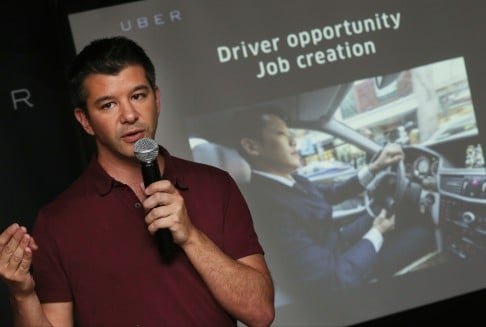
Uber can turn its customer and driver base into mobs. More than a million people signed Uber petitions last year, sent directly to them through the Uber app. Lord knows how many people call or text the mobile phones of local politicians when Uber publishes them. Uber CEO Travis Kalanick calls this "principled confrontation". "We're totally legal ... and the government is telling us to shut down," he told Vanity Fair last year. Sure.