Can Hong Kong's new competition law help break the current taxi monopoly?
James Marshall and Karen Leung say Hong Kong's Competition Ordinance, which comes into force next month, could provide a vital boost to the so-called 'sharing economy'

Hong Kong's tech-savvy consumers expect personalised, convenient and cost-effective services, and the so-called "sharing economy" has developed to meet this demand. New technologies like Uber connect customers directly with suppliers - in this case, by linking passengers with self-employed taxi drivers in more than 300 cities worldwide.
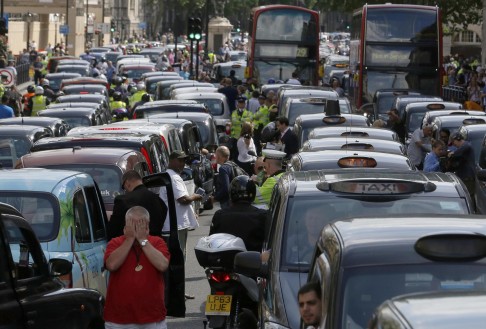
But Uber has been the subject of fierce debate internationally. Taxi drivers have brought cities such as Paris and London to a standstill in protest over new forms of competition. In Hong Kong, the government faces a choice between protecting 18,000 licensed taxi drivers and promoting the growth of this more innovative sharing economy. Could Hong Kong's new competition law - which comes into force in December - have a role in shaping the outcome?
The sharing economy challenges traditional business models by offering consumers direct access to business owners, and sectors that have previously been highly regulated - including taxis - are feeling the strain. Uber faces the twin challenge of protests by existing market players and increased regulatory scrutiny. There are questions over whether the legislative framework designed for an "offline" world can deal effectively with business models like Uber.
In Hong Kong, the government faces a choice between protecting 18,000 licensed taxi drivers and promoting the growth of this more innovative sharing economy
In August, Hong Kong police raided Uber's office and arrested staff and five driver-partners for allegedly operating unlicensed transport and failing to carry adequate insurance. Uber has not been charged - yet - but it cannot rest easy given the legal maze it still faces. For example, it is not clear whether Uber is even a taxi service or simply a form of technology. It may seem an esoteric point, but until this question is answered, it remains unclear how Uber should be regulated - if at all. While Uber continues to operate in Hong Kong in spite of the uncertainty, consumers may not be able to take full advantage of its innovative business model until the legal picture becomes clearer.
"Private kitchens" are often regarded as Hong Kong's earliest form of the sharing economy. They emerged as a popular alternative to licensed restaurants more than a decade ago when "home chefs" began feeding customers from their domestic kitchens. Despite such a practice technically breaching health and safety rules, the government responded with a more flexible regulatory regime that balanced innovation and consumer safety. In Hong Kong, it seems that if there is a will to support innovative business models, a way can be found.
Hong Kong's new competition law will prohibit abuse of market power and anti-competitive agreements. It remains to be seen how the government, which has invested so much in promoting the ordinance, will respond to a case like Uber - will the new law help break up the current licensed taxi monopoly?