Who will nurture the fragile beginnings of a climate change agreement?
Kevin Rafferty says while hard-won, the Paris agreement by itself is likely to do little to slow or avert climate change. A serious commitment to promoting clean energy is needed

The media hyped words like “historic” and “game changer” to describe the agreement. Thousands of supporters in Paris did a Mexican victory wave to celebrate the end of fossil fuels and greenhouse gas emissions, or so they claimed.
READ MORE: Full coverage of the Paris climate change summit
It’s time for a reality check. The Paris deal will still see greenhouse gas emissions climbing to a peak in 2030, even if every country keeps its promises. At best, global temperatures will rise to 2.7 to 3 degrees above pre-industrial levels, far above 2 degrees, which scientists also say is the safety limit to prevent droughts, floods, rising seas and heat waves making life on earth unbearable.
What is needed is a multifocused effort to find new clean sources of energy that will allow up-and-coming countries to fulfil their dreams of pulling their people from poverty without making the earth uninhabitable
The Paris deal is not legally enforceable. It is an agreement, not a treaty. A treaty would have required US Senate approval, where Republicans would have scuppered it stillborn. It relies on the honour and honesty of each country to keep its promises to curb emissions.
Crucially, it omits to answer who will pay the US$100 billion a year to help poorer countries, both to assist heavy polluters to clean up their environment and to mitigate damage in the most vulnerable low-lying countries.
Paris is a defensive agreement that does not achieve what it sets out to do. What is needed is a multifocused effort to find new clean sources of energy that will allow up-and-coming countries to fulfil their dreams of pulling their people from poverty without making the earth uninhabitable.
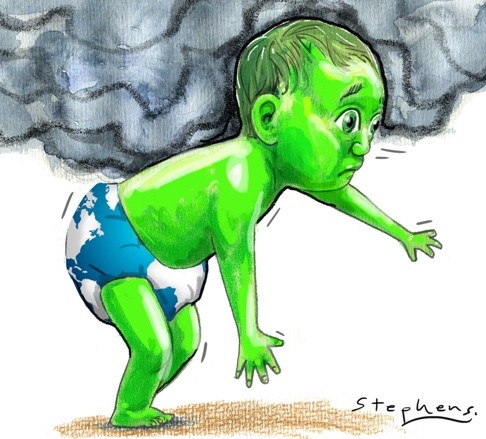
The best that can be said is that a new green baby has been born. Forget the talk of a healthy toddler taking its first steps. This a newborn infant awkwardly delivered after 20 years of labour and constant argument.
To continue the baby metaphor, it has to be weaned, reared, clothed and educated by wilful progenitors who are still living unhealthy lifestyles. If this were a real baby, health and safety officials would snatch it from parents like heavily polluting China and India, the US, which denies the problem, and Japan, which encourages polluters to believe in the myth of “clean” greenhouse gas emissions.