Advertisement
Opinion

How rules easing access to crowdfunding can kick-start the economy by boosting SMEs

Andrew Sheng believes the US move to allow start-ups to sell securities to the investing public through regulated platforms will inspire similar moves in Asia, which will benefit its bright and restless youth

Reading Time:4 minutes
Why you can trust SCMP
With crowdfunding, the door is now wide open to anyone to invest in start-ups. To safeguard themselves, crowdfunding investors are advised to do their homework thoroughly. Photo: Reuters
Andrew Sheng

The year has started with such doom and gloom in financial markets that everyone thinks start-ups may be the future of jobs and growth. But small and medium-sized enterprises, which are the major providers of jobs in any economy, are also typically long on passion and short of cash and funding.

Conventional stock markets raise funds for large corporations and it takes a long track record in earnings and reputation before SMEs can find the sponsors and funding to list. Crowdfunding is now the buzzword for start-ups but, until recently, it was illegal to raise equity (in the form of tradable securities) from the public unless approved by regulators. That process is not only costly but complicated for SMEs.

READ MORE: A good policy on crowdfunding will enhance Hong Kong’s role as global financial centre
Crowdfunding became popular in the US when website platforms started to raise money for charities (and political donations) in small amounts from the public. The US Securities and Exchange Commission (SEC) has issued new rules, effective from May 16, that allow companies to use crowdfunding to sell securities to the investing public. This revolutionises SMEs’ access to funding and also gives investors access to equity in start-ups.
Advertisement
Traditionally, start-ups get their equity from family and friends. Since the arrival of the internet, some enterprising firms have tried to access capital from strangers, through “start-up exchanges” and other platforms. The risks of investing in such unregulated platforms are twofold – the possibility of investing in fraudulent companies and also being cheated by the platform. Unregulated peer-to-peer (P2P) platforms in China are now shutting down and losing investor trust because quite a few are scams.
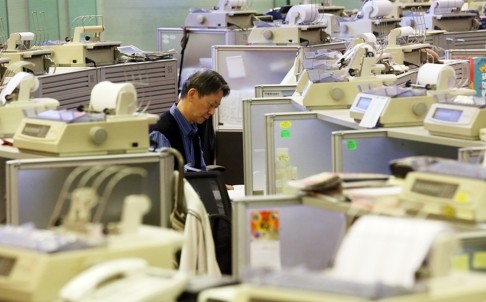
Conventional stock markets raise funds for large corporations and it takes a long track record in earnings and reputation before SMEs can find the sponsors and funding to list. Photo: Dickson Lee
To protect the public, the SEC generally bans companies and private funds from offering securities unless the transaction has been registered with the commission or there is an exemption from registration. Exemptions are only made for certain securities, such as hedge and venture funds with higher risks, if the investor is “accredited”. This means that if the investor is rich and experienced enough, he or she would be allowed to buy these exempted funds or securities because the principle of “buyer beware” fully applies.
Advertisement

The definition of rich enough is someone with an annual income of US$200,000 (US$300,000 including a spouse’s income) and whose net worth (excluding primary residence) including their spouse’s is more than US$1 million. In Hong Kong, the broad definition of a professional investor is one with net assets of over HK$8 million.

READ MORE: Ten great Hong Kong projects made possible by crowdfunding

Advertisement
Select Voice
Choose your listening speed
Get through articles 2x faster
1.25x
250 WPM
Slow
Average
Fast
1.25x