Hong Kong has no refugee crisis, only a crisis of response
Tony Read says the issue of asylum seekers invites knee-jerk reactions but we must look at the facts

In the last few weeks, there has been a steady trickle of voices advocating the use of closed camps and withdrawal from the UN Convention Against Torture as a response to the growing influx of migrants to Hong Kong. Once having made entry to the region legally or illegally, it is comparatively easy for immigrants to make an asylum claim, thus giving them access to Hong Kong’s welfare system for protection claimants and an opportunity to seek out illegal work if they are so minded.
Put asylum seekers in reception centres and pull out of UN torture convention, says Hong Kong lawmaker
Despite a distinct lack of enthusiasm for these radical solutions from the Beijing leadership, both these ideas seem to persist in the minds of many political commentators and opinion makers as some sort of magic silver bullet. It’s as if at a single stroke (or maybe two), we think the problem will be solved, so we can get on with our lives again.
Alarmists warn about the dangers of being swept into the harbour by a tsunami of immigrants
However, it is quite clear that this is a complex issue and to treat it as just a matter of picking the right deterrent is not going to provide a lasting solution. But even before trying to tackle the complexities, we need to ask the question: How serious is this threat?
Firstly, the numbers. The alarmists have warned about the dangers of being swept into the harbour by a tsunami of immigrants if we even suggest accepting as residents the just-less-than 1 per cent of claimants who are successful. The fact is that we have a total accumulated backlog of around 11,000 claims from the last three years of screening waiting to be assessed, yet we happily accommodate over 50,000 new entrants to Hong Kong each year from mainland China without even batting an eyelid. It is hardly credible to say that we have a population crisis, even in our admittedly crowded society.
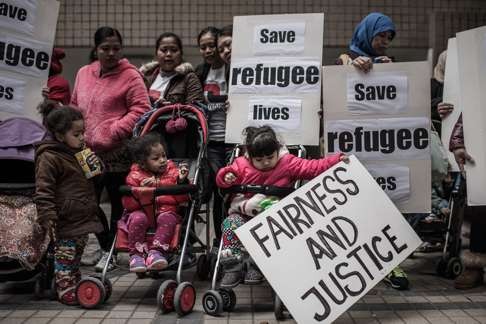
Build a detention camp in Shenzhen for Hong Kong’s asylum seekers: former security chief Regina Ip
Secondly, the financial threat. It’s really not necessary to do the numbers on this to realise that the total costs of immigration manpower, increased border control, duty lawyer fees, social welfare and financial handouts, significant as they may be, are not going to put a dent in Hong Kong’s financial resources. It may seem to be money down the drain but it’s not going to sink the economy.
Thirdly, crime and social stability. The press and social media have reported widely on the involvement of asylum seekers in crime, drug trafficking, prostitution and illegal working. Again, this is certainly not to be condoned or passed over lightly but, in real terms, the amount of criminal activity and socially unacceptable behaviour by asylum seekers is low compared to the overall crime rate and is certainly not fuelling any upsurge of criminal activity in the city.
So what crisis are we facing if it’s not that critical? Well, it would certainly not seem to justify a knee-jerk reaction like setting up closed camps or withdrawing from the UN torture convention, but it is certainly serious enough to warrant careful attention. What we are experiencing is actually a crisis of response. How do we respond well?
Hong Kong people smuggling syndicates smashed: nearly 3,000 illegal immigrants arrested in joint operation with mainland police
The recent cross-border police operations to smash people smuggling syndicates and arrest immigrants arriving illegally by boat is a good response to cut off the flow of illegal immigrants making bogus asylum claims. However, it must also be appreciated that these same routes and methods may be used as an escape route to asylum by those who have genuinely suffered persecution and whose lives may be in danger.