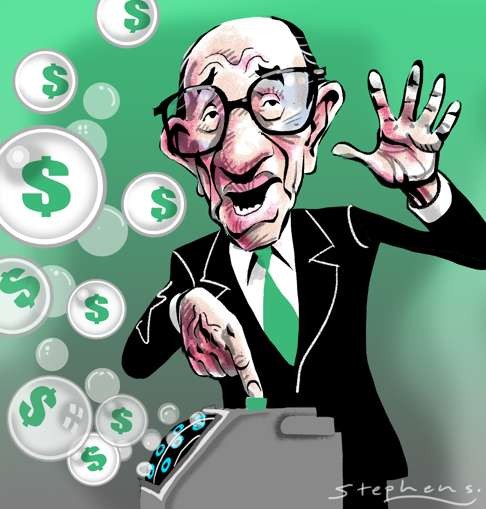
Are we doomed to be trapped in a bubble economy?
Andy Xie says the world has become so addicted to easy money – and the activist monetary policies that produce it – that even the global financial crisis of 2008 failed to wean us off it

China’s fresh bank ratio cut points to more monetary easing for economic revival
Since 2008, quantitative easing has been sold as a cure for reviving growth. It has led to a gigantic debt bubble in commodities and emerging markets. Their bursting is triggering the current downturn. And the fallout will weigh on the world for years to come. Considering the steep costs of the market bubble, whatever growth it generated before was not worth it.
Before 2008, holding interest rates low in the name of inflation targeting led to a credit bubble in the US and Europe. Today, there is enough evidence to demonstrate that an activist monetary policy for targeting growth or inflation does more harm than good. It is astonishing that the same economic elite continue to advocate the same thing after all these years.
It appears that the world needs a political revolution to change the people at the top
It appears that the world needs a political revolution to change the people at the top. Without wholesale personnel changes, the world will continue on its slippery slope of stagnation, rising inequality and more financial crises.
Activist monetary policy was used aggressively in the 1970s to revive growth against the headwinds of surging oil prices. It led to stagflation. The experiment discredited the efficacy of activist monetary policy and paved way for the rise of Paul Volcker. He vanquished inflation by holding interest rates high enough to restore the US Federal Reserve’s credibility in fighting inflation.
No one since has come up with an economic theory to revive the validity of an activist monetary policy. The current vice-chairman of the Fed, Stanley Fisher, came up with one based on an inflexible labour market. It is clearly not relevant today.