China’s ‘One Belt, One Road’ is the perfect stage for Hong Kong to showcase its strengths
Kevin Sneader says Hong Kong’s companies and professionals can prove the doubters wrong by grasping the opportunities offered by Xi Jinping’s initiative, with three areas in particular where their expertise can shine

That’s the legend, at least. We may never know exactly how the Chinese learned to cultivate the Bombyx mori silk moth. What we do know is that after the Han dynasty began to export silk in 2BC, demand for the fabric was so intense that it spurred development of a vast network of trade routes stretching from China, through India, Asia Minor, throughout Mesopotamia, to Egypt, Africa, Greece, Rome and Britain. For the next 17 centuries, until the Ottoman empire severed trade with the West in 1453, silk threads helped weave together the destinies of Europe and Asia.
The Silk Road was a conduit for much more than silk. It transmitted people, culture, religion, art, language and sometimes disease. Over the long term, then as now, connectivity and greater circulation of goods and capital brought growth, prosperity and progress.

Roadblocks and detours aplenty on China’s New Silk Road
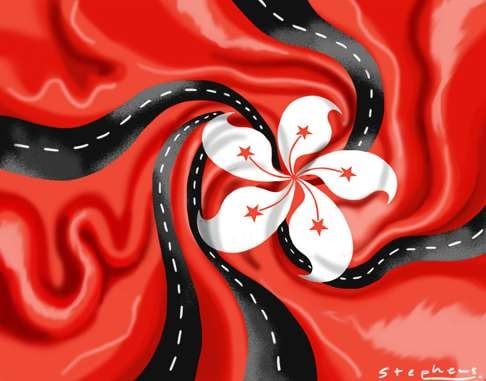
Now President Xi Jinping ( 習近平 ) has called for a revival of this legendary network with proposals for a “Silk Road economic belt” and a “21st century maritime Silk Road”. The “belt” would include construction of an overland network of roads, rail links, energy pipelines and telecommunications ties linking China, Central Asia, the Middle East, Europe and Russia. The maritime “road” envisions connecting China’s coastal cities though the South China Sea to ports on the Indian Ocean, the Red Sea and the Mediterranean Sea, and Africa.
Hong Kong has always defied those who dismissed its ability to adapt