After Brexit, the coming clash over globalisation
Andrew Sheng says conflict appears inevitable as we enter an age of radical uncertainties amid the relentless forces of globalisation, now aided by technology

When did globalisation truly begin? The year 1492 is associated with the discovery of America by Christopher Columbus. By 1498, when Vasco da Gama opened up the sea route via the Cape of Good Hope to Asia via Africa, trade became truly globalised. Prior to 1492, trade between Europe and Asia was dominated by Islamic traders from Spain to Malacca, via the sea route and also overland via Baghdad to China through the Silk Road.
The year 1492 was a watershed for globalisation. It also marked the reconquest of Spain when the last Islamic fortress of Alhambra in Granada surrendered. In that year, the expulsion of Jews and Moors from Spain began, drawing a line on the Golden Age of Islam.
As someone wise told me recently, we are shifting from an age of risk to an age of radical uncertainty
The rise of the West is commonly associated with the Renaissance. But the revival of Greek philosophy and science in Europe owed no small measure to Islamic philosophers and travellers who went to Asia and Africa after Marco Polo’s journey to China.
There is increasing awareness that even though there was considerable trade between Rome and the Indian and Chinese market during the time of Christ, it was essentially Euro-Asian trade. What was remarkable was that within 100 years of the discovery of America, Spain and Portugal had opened up the American and Asian markets. From 1530 to 1670, Europe imported over 255 tons of gold and 150,000 tons of silver from South America, enabling it to finance its Industrial Revolution.
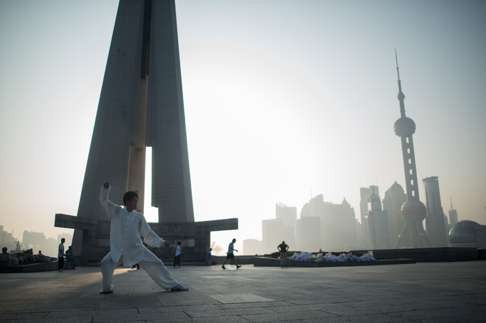
How China exemplifies the double edged sword of globalisation
The five centuries of globalised trade after 1492 may be divided into two halves. Up to roughly 1750, the Europeans were attracted to the wealth of Asia, particularly India and China. Economic historian Angus Maddison estimated that, in 1700, the gross domestic product of Asia (in purchasing power parity basis) was US$214 billion, or nearly 58 per cent of world GDP. China alone accounted for 22 per cent of world GDP. By comparison, Western Europe had an estimated GDP of US$81 billion. But once the Europeans had started competitively to carve up colonies in Asia, Africa and the Americas, the proceeds of colonisation brought new wealth and new markets.