10 reasons why the South China Sea ruling may lead to regional peace and cooperation
Andrew Leung says the air of restraint following the contentious verdict and Manila’s recent overtures augur well for a bilateral solution between China and the Philippines

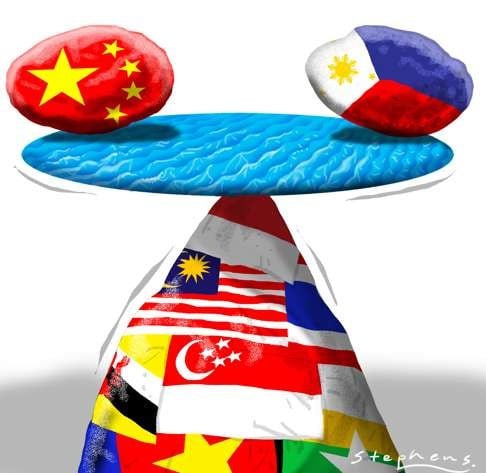
Philippine President Rodrigo Duterte was reported to favour a settlement with China after discussions with the US ambassador and a delegation of US lawmakers.
China’s legal position is not as totally indefensible as some may think
During a recent exploratory visit in Hong Kong, his special envoy, former president Fidel Ramos, managed to sign an ice-breaking statement with Fu Ying (傅瑩), chairwoman of the National People’s Congress Foreign Affairs Committee, and Wu Shicun, the president of China’s National Institute for South China Sea Studies. It proposes cooperation in fisheries, marine conservation, tourism, investment, and drug and anti-corruption enforcement. Meanwhile, most other Association of Southeast Asian Nations members are trying to stay out of the dispute.
The turn of events is driven by a number of dynamics.

Fidel Ramos: Duterte’s icebreaker in South China Sea row
First, China’s legal position is not as totally indefensible as some may think. Beijing has consistently maintained that the court is not a competent authority in settling territorial disputes. Under Article 298 of the UN Convention on the Law of the Sea, a signatory may, with a formal written statement, exclude any compulsory jurisdiction over “maritime boundary delimitation, territorial sovereignty, military confrontation, and/or historical titles”. Some 30 signatories have exempted themselves in this way, including China. Indeed, in its carefully worded press release, the tribunal has been explicit in restricting its authority to “waters and resources” rather than land claims, historical or otherwise.