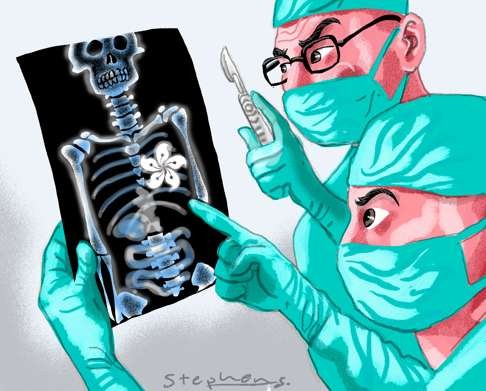
Election X-ray reveals what ails Hong Kong, but can the patient be healed?
Stephanie S.Y. Cheung says the Legislative Council poll results offer a diagnostic picture of the city’s condition but, as in life, the wrong treatment could be fatal

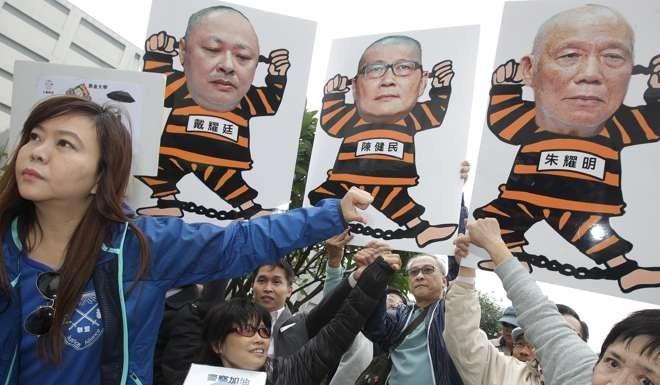
The first glaring result is that gone is the “godfather” of Hong Kong independence, Horace Chin Wan-kan, whose treatise on the city state and rhetoric – comprising a mix of history, religion and political theory – on establishing Hong Kong’s sovereignty, stirred discussion on the web. Chin himself admitted defeat on Facebook, and announced his own gradual disappearance. From the way he cursed all his opponents, a comeback seems unlikely. Chin’s friend, Wong Yeung-tat, a vocal advocate of using violence to achieve independence, was also firmly rejected by voters.
Originally a bunch of minority voices on the fringe, interest in their ideas mushroomed when attention was drawn to them by the chief executive and mainland officials. Voters have shown clearly that the majority do not favour independence or the use of violence.
Thankfully, the elections have shown that all the sound and fury of these two extreme sides signify nothing. Instead, it is time now to settle down and deal with the city’s real issues, with insight gained from the polls.
There is widespread support for the students’ fight for true democracy
The election reaffirms the true spirit of Hong Kong to be peace-loving, freedom-loving, sensible and orderly. Hongkongers are pragmatic. They do not vote for change just for the sake of it. Of the 24 ordinary functional constituencies, 19 kept their original seats. In the legal constituency, Dennis Kwok Wing-hang not only retained his seat, but netted almost 70 per cent of the vote with an increase of 14 percentage points over the 2012 result. This is noteworthy as Kwok was fiercely attacked by many in 2015 for “selling out” Hong Kong when he and Ronny Tong Ka-wah visited Beijing to discuss democratic reforms.