Should a food that is banned elsewhere really be allowed here?
Difference in dealing with issue over chemical in some mooncakes highlights need for a review of guidelines on food safety

When the Centre for Food Safety earlier announced that all the 170 mooncake samples tested were satisfactory, it was taken as an assurance that they are safe to eat. Like in the tests for other festive delicacies, the benchmarks used seldom raised questions. Test results by the watchdog are generally seen as trustworthy.
But the health scare in Macau involving a popular Hong Kong brand has raised questions about our food safety standards. Officials in our neighbouring city ordered a recall after a sample of mooncake from Hang Heung Cake Shop was found to contain excessive aflatoxin B1, a chemical that could cause liver cancer.
Whether the same batch of mooncakes had been tested by the Hong Kong government earlier is still unclear. But the samples would have been given the go-ahead anyway, as our standard for the substance in question is reportedly much more relaxed.
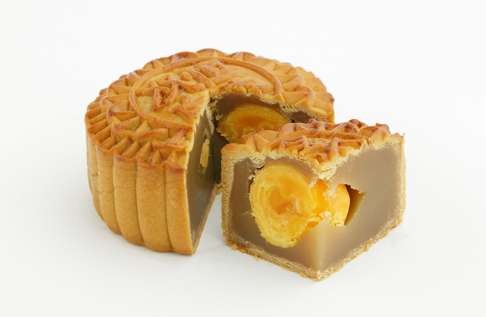
Given the level of the toxin was found to be 2.48 micrograms higher than the permitted level of 5 micrograms for every 1,000g per sample, having a mooncake or two during the Mid-Autumn Festival is unlikely to result in liver cancer. But the local community is entitled to ask whether the standards should be tightened in the wake of the discrepancy between the two places.