How the Hong Kong elite’s focus on economic gain has led to social and political turmoil
Andrew Sheng says society is like a three-legged stool, and the divided city is suffering the consequences of a devotion by those in power to maximising profit in the short term

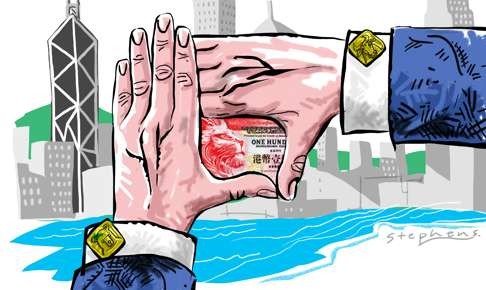
A very wise and perceptive friend reminded me that society is like a stool founded on three legs, where one unstable leg would tip the stool over. The three legs are economic, political and social. Economics is a necessary, although not sufficient, condition; without growth and development, there are no resources to deal with providing good social services, such as education, health and security, including dealing with poverty and social inequities.
Hong Kong’s elite, who benefited most from the expansion of the economic cake, have always pushed for the status quo and more economic freedoms
The second leg is political, which in any society is a continuous bargaining process between different components to arrive at how to share and allocate resources, deal with what is important in society and maintain balance and fairness. Political bargains are always trade-offs, involving complex compromises because there are only so many resources to go around. Notice that the idea of one person, one vote democracy is only one option on the political scale. Hong Kong is a classic example where its citizens have almost every freedom except the last hurdle.
So why is Hong Kong politics a forum with few compromises? One possible answer is that Hong Kong is struggling with the third leg of post-colonial debate on social identity. Each citizen, especially the young, is trying to clarify which individual and social values such as religion, family, culture or what is considered sacred are part of the social contract. Social contracts are either constitutional, written in law such as the US constitution, or unwritten, like the British one. Hong Kong has its own constitution, the Basic Law, but being a special administrative region, it is subordinate to the Chinese constitution. Social compacts are by their very nature fluid and ambiguous, because it is an understanding of what an individual expects from the community, while the state also has expectations of the individual.
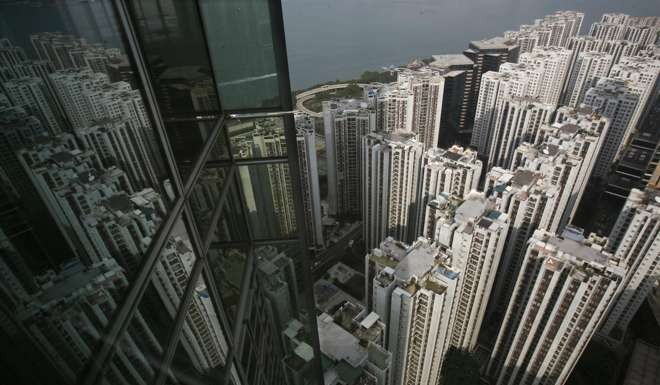
Hong Kong’s business elite: ‘a bellicose regime, a tangle of cowardice, blindness, craftiness and stupidity’
Hong Kong’s elite, who benefited most from the expansion of the economic cake, have always pushed for the status quo and more economic freedoms, without paying serious attention to the other two legs. Hong Kong’s messy political consequences are due largely to insufficient attention to these two issues by its own elite.