Advertisement
Hong Kong Basic Law
Opinion

Hong Kong will pay a heavy price for yet another Basic Law interpretation

Cliff Buddle fears that a looming intervention by the NPC Standing Committee to resolve the Legislative Council oath-taking row – through a fifth interpretation – will further erode the city’s autonomy and undermine the rule of law

Reading Time:4 minutes
Why you can trust SCMP
Cliff Buddle fears that a looming intervention by the NPC Standing Committee to resolve the Legislative Council oath-taking row – through a fifth interpretation – will further erode the city’s autonomy and undermine the rule of law
Cliff Buddle
The move would strike a blow to Hong Kong’s high degree of autonomy under the Basic Law and tilt the delicate balance between “one country” and “two systems” further towards the former. Illustration: Craig Stephens
In one convenient swoop, an interpretation of the Basic Law by Beijing could settle many of the issues raised in recent weeks concerning pro-independence lawmakers and their oaths. It might even restore some much-needed order to the Legislative Council. But such an intervention by the central government would come at a heavy cost.

Beijing interpretation on Legislative Council oath taking rattles Hong Kong

An interpretation delivered by the National People’s Congress Standing Committee would effectively decide issues which are already before Hong Kong’s courts. It would render the proceedings which began in the Court of First Instance yesterday pointless and, in doing so, undermine confidence in the city’s separate legal system and rule of law.

The move would strike a blow to Hong Kong’s high degree of autonomy under the Basic Law and tilt the delicate balance between “one country” and “two systems” further towards the former. A sorry saga, which began with puerile and offensive comments made by newly elected lawmakers with pro-independence leanings when requested to make their oaths, has taken on grave constitutional implications.
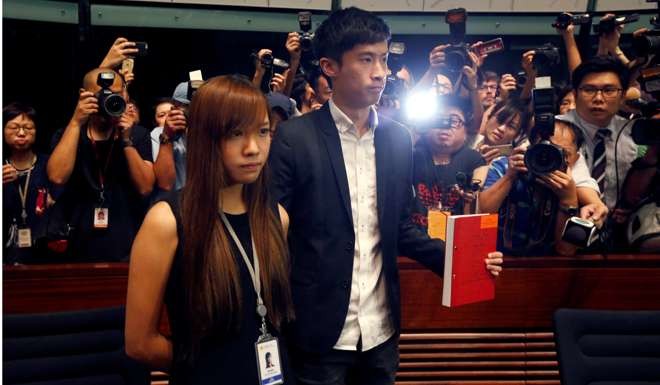
Pro-independence lawmakers Yau Wai-ching and Sixtus Baggio Leung in the Legco chamber. The central government is, understandably, concerned about the rise of an independence movement in Hong Kong. Photo: Reuters

Mainland paper slams Hong Kong independence advocates in 1,000-word commentary

The central government is, understandably, concerned about the rise of an independence movement in Hong Kong. We are no longer talking about idle words by a few young people. Now, advocates of independence are winning sufficient votes in elections to secure entry to Legco.

Advertisement

But there is no reason why Hong Kong cannot deal with such matters on its own. That, after all, is the essence of the “one country, two systems” arrangements which have governed the city since its return to China almost 20 years ago.

The hope and expectation among Hong Kong officials and politicians on both sides of the political divide has been that the issues are settled by the city’s own institutions. Unlike previous Standing Committee interpretations in 1999 and 2005, there has been no formal request from the Hong Kong government. This time, it seems, any interpretation will be initiated by Beijing.
Advertisement
At the opening of the court case yesterday, Senior Counsel Benjamin Yu, for the government, informed the judge that the administration’s position is that “the issues in question can and should be resolved within the [Hong Kong] judicial system”. Elsie Leung Oi-sie, vice-chairwoman of the Basic Law committee, which advises the Standing Committee on interpretations, expressed similar views before the oath-taking controversy erupted.
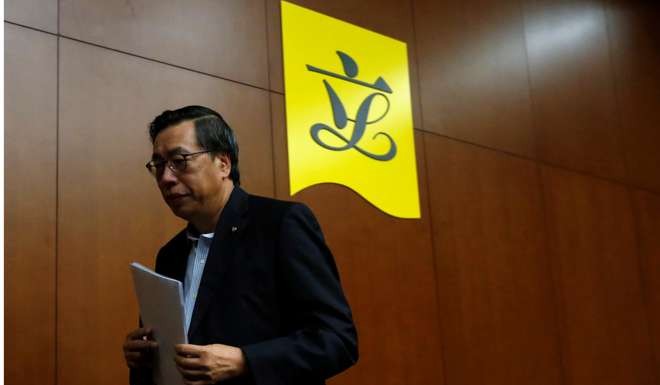
Legco president Andrew Leung had initially agreed to allow the two pro-independence lawmakers a second chance to take the oath. The government’s decision to bring a legal challenge to his decision set the executive and legislature on a collision course in court. Photo: Reuters
Advertisement
Select Voice
Choose your listening speed
Get through articles 2x faster
1.25x
250 WPM
Slow
Average
Fast
1.25x