One phone call won’t change US policy on Taiwan – or relations with China
Tom Plate says Beijing is right not to lose its cool over the unexpected talks between the US President-elect Donald Trump and Taiwanese leader Tsai Ing-wen


The “she” being Tsai Ing-wen, the president of what this Cornell Law School graduate and many Taiwan islanders term the Republic of China (but not recognised by the UN or dealt with officially by many of our 194 nations). By inducing Donald Trump, still on schedule to become US president next month, to accept her congratulatory long-distance phone call (what could be more innocent, right?), the island’s anti-unification leader brought the global spotlight down on her 24 million constituents living in the shadow of the mainland – and managed to set ajar decades of delicate hard work between Beijing and Washington.
With one phone call! Viewed purely as a spectator sport, mark it down as a home run for Taiwanese diplomacy. Notwithstanding her bumpy public opinion ratings at home, Tsai is a clever woman. Maybe Zhongnanhai could learn from her – how in today’s Twitter-diplomacy, less can be more.
Watch: Trump talks by phone with Taiwanese president
But was Tsai using Trump, or vice versa? A widespread view in the US is that the American president-elect may know his real estate game better than a Rockefeller but, on the evidence presented, he doesn’t know his geopolitics from his mooncakes. What’s more, every new president faces a steep learning curve – though Trump’s all too often looks to be more a vertical line than anything curvaceous.
On the evidence presented, the US president-elect doesn’t know his geopolitics from his mooncakes
Perhaps the slow motion (as of this writing) in picking a secretary of state should actually be applauded – and is evidence that there is more to Trump the international tactician than meets the eye. As the face of American diplomacy, after that of the president’s, this highest-profile appointment is important, especially in a know-little administration. The late Theodore Sorensen, president John Kennedy’s storied speech-writer, would often remark that all major US foreign policy decisions are perforce presidential ones, no matter how forceful the sitting secretary of state. But Trump seems so categorically unschooled in international issues that perhaps, at bottom, he does really know what he really doesn’t know. And that would be the start of on-the-job wisdom.
The time period between the election and the inauguration of a new American president is both too short – to get those cabinet executive positions filled – and too long. Much can go wrong with so much time to blab – or tweet.
What does Donald Trump’s phone call with President Tsai mean for future US arms sales to Taiwan?
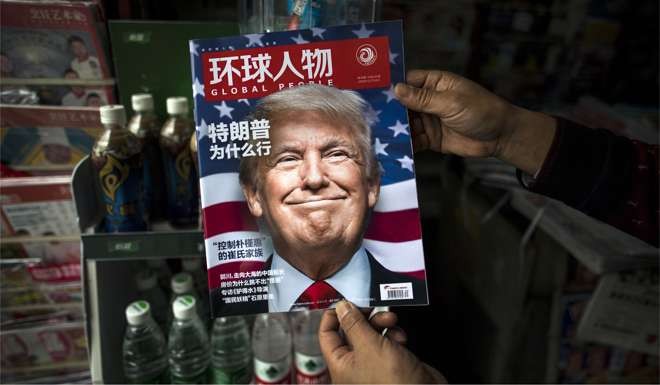
Trump may pick Xi Jinping’s long-time friend as US ambassador to China
In the book Difficult Transitions: Foreign Policy Troubles at the Outset of Presidential Power, by two highly accomplished career foreign policy officials, Kurt Campbell and James Steinberg, a tableau of no fewer than 20 guidelines are offered for transition managers. Two of relevance are: “Defer decisions, when possible, until confident of the facts, while recognising that there will be often gaps in information”; and, “Think carefully before reversing predecessors’ policy decisions”.