From Brexit to the US election, 2016 saw a march towards universal distrust
Francis Fukuyama says the creeping belief in open societies that everything is rigged or politicised attacks our trust in institutions. Without trust, democracy itself won’t survive
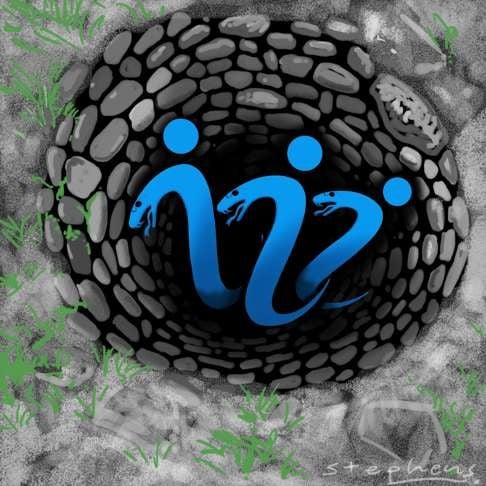
The belief in the corruptibility of all institutions leads to a dead end of universal distrust. Illustration: Craig Stephens
One of the more striking developments of 2016 and its highly unusual politics was the emergence of a “post-fact” world, in which virtually all authoritative information sources were called into question and challenged by contrary facts of dubious quality and provenance.
The emergence of the internet and the World Wide Web in the 1990s was greeted as a moment of liberation and a great boon for democracy worldwide. Information constitutes a form of power, and to the extent that information was becoming cheaper and more accessible, democratic publics would be able to participate in domains from which they had been hitherto excluded.
The development of social media in the early 2000s appeared to accelerate this trend, permitting the mass mobilisation that fuelled various democratic “colour revolutions” around the world, from Ukraine to Burma (Myanmar) to Egypt. In a world of peer-to-peer communication, the old gatekeepers of information, largely seen to be oppressive authoritarian states, could now be bypassed.
Advertisement
While there was some truth to this positive narrative, another, darker one was also taking shape. Those old authoritarian forces were responding in dialectical fashion, learning to control the internet, as in China with its tens of thousands of censors, or through the recruitment of legions of trolls and unleashing of bots that could flood social media with bad information, as in the case of Russia. These trends all came together in a hugely visible way during 2016, in ways that bridged foreign and domestic politics.
A Ukrainian serviceman patrols the area in Vodyanoe village, near Mariupol, Ukraine, last month. The Russian government has put out blatant falsehoods like the “fact” that Ukrainian nationalists were crucifying small children, or that Ukrainian government forces shot down Malaysia Airlines Flight 17 in 2014. Photo: EPA
The premier manipulator of social media turned out to be Russia. The Russian government has put out blatant falsehoods like the “fact” that Ukrainian nationalists were crucifying small children, or that Ukrainian government forces shot down Malaysia Airlines Flight 17 in 2014. These same sources contributed to the debates on Scottish independence, Brexit, and the Dutch referendum on Ukraine’s European Union membership, amplifying any dubious fact that would weaken pro-EU forces.