Advertisement
Belt and Road Initiative
Opinion

On the belt and road, the Chinese civilisation is on the march

Peter T. C. Chang says Beijing’s ambition to build a pan-Asian sphere of common prosperity will affect far more than the region’s economy, and it would be wise to watch out for the civilisational fault lines

Reading Time:4 minutes
Why you can trust SCMP
Peter T. C. Chang says Beijing’s ambition to build a pan-Asian sphere of common prosperity will affect far more than the region’s economy, and it would be wise to watch out for the civilisational fault lines
Peter T. C. Chang
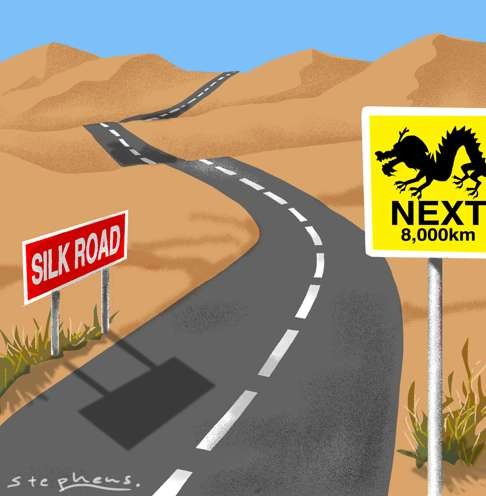
The belt and road initiative is set to become an integrated economic zone unprecedented in scale, with the potential to positively affect a third of the world’s population. Illustration: Craig Stephens
Just as the Euro-American world grapples with the sombre after-effects of Brexit and the installation of a pugnacious Trump presidency, the Asian milieu is becoming transfixed with the anticipation and allure of the “One Belt, One Road” initiative. At a time when the West is building walls in retreat, the East is constructing gateways in an outward advance, to embrace globalisation, through the belt and road, the brainchild of President Xi Jinping (習近平).

Retracing the ancient silk and spice trade routes, the belt and road seeks to reopen the economic corridors and re-energise the commercialism that once drew princi­palities near and far to the Middle Kingdom. Beijing’s endgame is to build a pan-Asian sphere of common prosperity, evoking both the celebrated adventures of Marco Polo and Zheng He’s expeditions, across the land and seas, all at once, this time deploying bullet trains and supertankers.

If actualised, the belt and road initiative will become an integrated economic zone unprecedented in scale, with the potential to positively affect a third of the world’s population, dwarfing America’s Marshall Plan, with which it has often been compared.

China’s belt and road can take its cues from the world’s first model of globalisation

Visitors view lanterns at a belt-and-road-themed light festival last month in Hancheng, Shaanxi province. The belt and road initiative is as much a dispensation of Chinese soft power as it is a projection of geopolitical sway, to restore China’s regional, if not global, pre-eminence. Photo: Xinhua
Advertisement

This grand vision may be seen as the magnification and internationalisation of Xi’s “Chinese Dream”, into an “Asian Dream”. To be sure, this is as much a dispensation of Chinese soft power as it is a projection of geopolitical sway, to restore China’s regional, if not global, pre-eminence. For some, the markings of a modern metamorphosis of ancient China’s tributary system are unmistakable, as Beijing reclaims the suzerain role, commanding deference and allegiance from the peripheral vassal states.

This grand vision may be seen as the internationalisation of Xi’s ‘Chinese Dream’, into an ‘Asian Dream’
Clearly, this geopolitical reconfiguration is not going unchallenged, not least by the incumbent superpower, America. The Obama administration’s “Pivot to Asia”, centred on the now abandoned Trans-Pacific Partnership free trade agreement, was the US containment strategy. And as the newly inaugurated Trump presidency flexes its muscles, this rebalancing of power could take on a military dimension; to wit, in the contested waters of the South China seas.
Advertisement
Not unexpectedly, a more assertive China is also causing discomfit among Asian member states. Adhering to the longstanding strategic policy of maintaining equidistance, Singapore, for example, is finding it increasingly difficult to stay above the fray. In the case of China’s next-door neighbour Myanmar, a proposed highway traversing the full length of the country, granting landlocked Yunnan (雲南) province direct access to the open seas, namely, the Bay of Bengal, has stirred apprehensions over issues of national security and sovereignty.
Advertisement
Select Voice
Choose your listening speed
Get through articles 2x faster
1.25x
250 WPM
Slow
Average
Fast
1.25x