Can China help the Philippines fight piracy?
Zhou Bo says President Duterte should seek to bring Asean members on board, as well as China, in the fight against robbery on the high seas to bolster regional cooperation

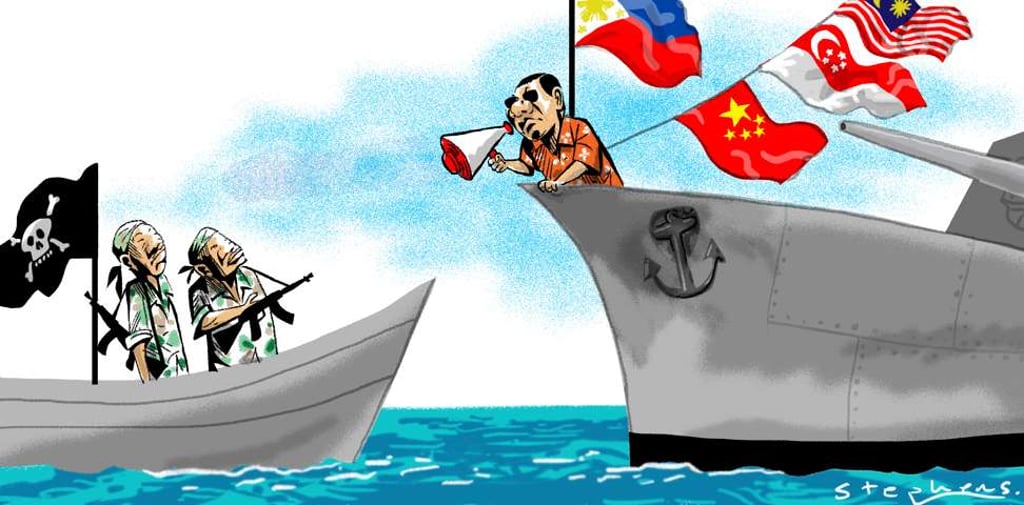
Duterte was referring to the Sulu Sea. According to the International Maritime Bureau, in 2015, the number of piracy cases in Southeast Asia accounted for 71 per cent of the global total. Last year, the number of maritime kidnappings hit a 10-year high.
However, the situation in the Sulu Sea is more complicated. The sea covers a much larger area, and the collective military capabilities of the three navies and coastguards fail to impress. Both Malaysia and the Philippines are short of patrol vessels and aircraft, which in part explains why Malaysia plans to buy Chinese-built littoral mission ships. Although the Indonesian navy is the largest in Southeast Asia, it has to, first of all, patrol its lengthy archipelagic coastline, which is also plagued with piracy. In fact, more than half of the incidents in Southeast Asia occurred in Indonesian waters.
Piracy surge could turn Southeast Asian waters into ‘new Somalia’, Indonesia warns
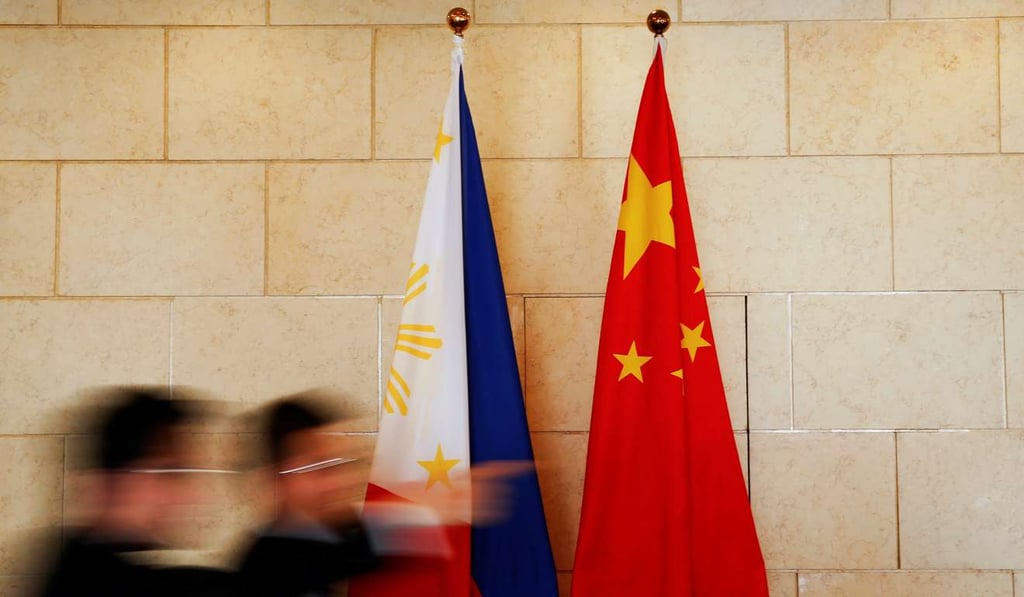
China ‘likely to agree to Duterte’s request for anti-piracy patrols’
Duterte is right that external help is probably needed to resolve such an issue. But for China to consider his proposal, he needs to provide details, including specifying the exact location of where China might help. So far, he has mentioned “the international waters” in the south Sulu Sea. Such ambiguity could cause confusion, especially given the territorial dispute between the Philippines and Malaysia over Sabah, which raises the question of where the territorial waters of the two countries are.
The Asean community bears prime responsibility in securing an important shipping lane in its own region
His remarks that these patrols could only be done by the Chinese coastguard, rather than the Chinese navy, are also flawed, legally speaking. According to international maritime law, any warships, military aircraft or other ships on government service of a state may seize a pirate ship or a ship taken by piracy on the high seas. To put it bluntly, they don’t even need an invitation to do so, as long as they are on the high seas.
But the Chinese and Philippine coastguard can indeed cooperate as he wishes. During Duterte’s visit to China last October, the two countries signed a memorandum of understanding to establish a joint coastguard committee on maritime cooperation. Such cooperation may not necessarily be confined to the South China Sea, where China and the Philippine have territorial disputes; it may also include the Sulu Sea, where China’s assistance is needed. The two countries may conduct joint patrols or collective patrols involving other stakeholders.
A good example is that, since 2011, China, Laos, Myanmar and Thailand have been conducting joint law-enforcement patrols along the Mekong River.