Advertisement
Hong Kong must protect its high degree of autonomy to ensure ‘one country, two systems’ remains effective
Cliff Buddle says any mainland interference in local affairs does the city – and the credibility of mainland authorities – no favours
4-MIN READ4-MIN

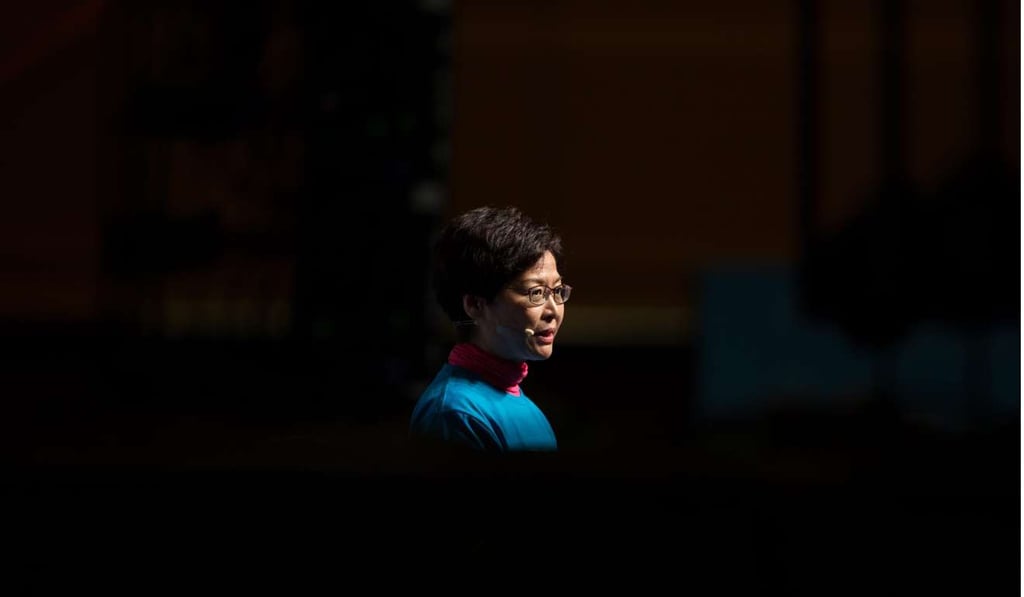
Carrie Lam Cheng Yuet-ngor appears to have already secured the 150 nominations needed to stand and is the strong favourite. Yet a recent poll commissioned by this newspaper showed her to be currently less popular with the public than her rival John Tsang Chun-wah. The apparent role of the central government in favouring and lobbying support for Lam among members of the Election Committee, which nominates and selects the leader, has raised fresh questions about interference by Beijing in the city’s affairs.
Beijing’s backing both a curse and a blessing in Hong Kong leadership race
It comes at a time of growing concern that the high degree of autonomy Hong Kong enjoys under its de facto constitution, the Basic Law, is being undermined. The disappearance of booksellers from Hong Kong last year – and more recently a tycoon – and their reappearance on the mainland to help authorities there with investigations also suggests a blurring of the boundaries between the mainland’s system and that in Hong Kong. No wonder one candidate, former judge Woo Kwok-hing, is proposing a new law to make interference by mainland officials a criminal offence.
Advertisement
Woo makes an interesting point. Much has been said about Hong Kong’s duty to pass national security laws under Article 23 of the Basic Law, to protect the country. But the preceding provision, Article 22, seeks to safeguard the city’s separate system. It prohibits mainland authorities from interfering in affairs Hong Kong administers “on its own” and requires them to abide by the city’s laws.
The word “on its own” appears 20 times in the Basic Law, applying to either Hong Kong, its government or, in one case, its legislature. It underpins the “one country, two systems” concept governing the city’s relationship with China. If Hong Kong’s high degree of autonomy and separate system is to be maintained, it must be free from interference.
Watch: John Tsang pledges to revisit Article 23
John Tsang – the most imperfect of our imperfect leadership hopefuls
Advertisement
Select Voice
Select Speed
1.00x