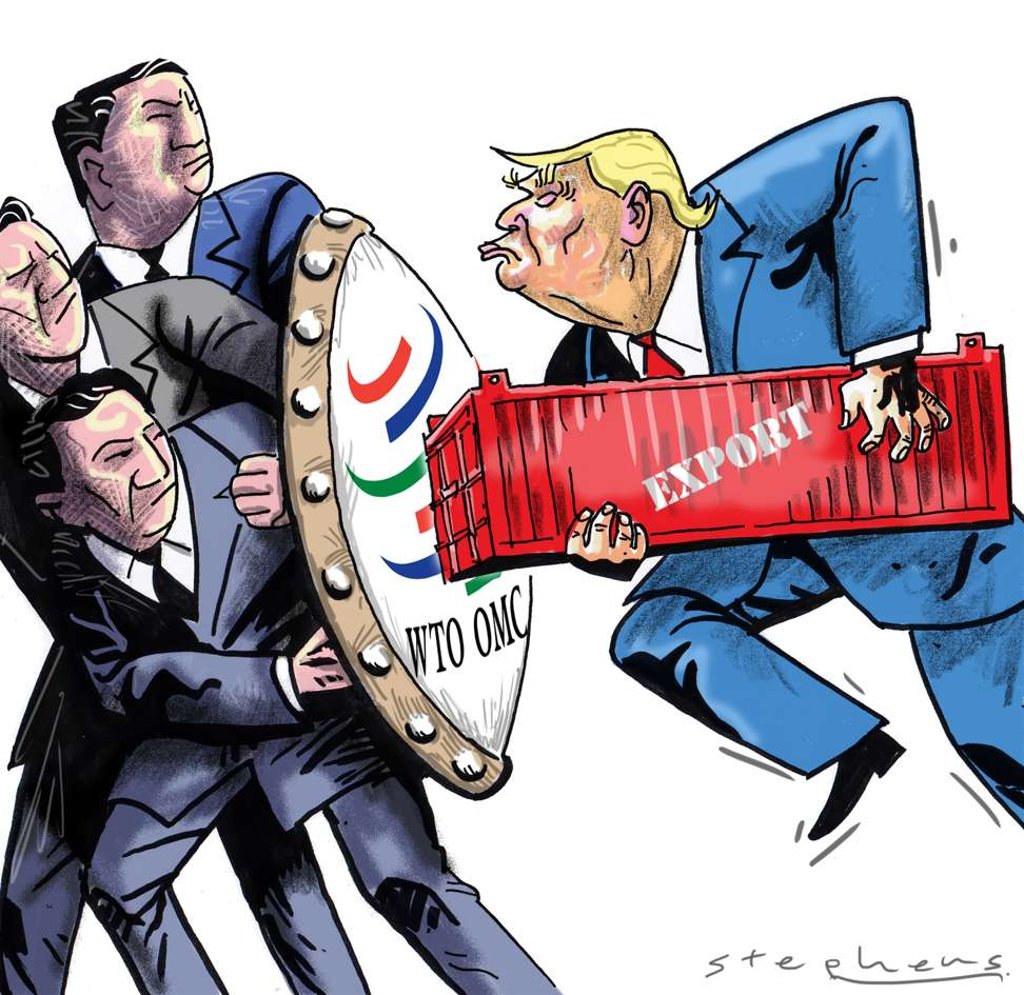
Policymakers must realise that there is no alternative to the World Trade Organisation as the responsible institution for articulating a solid global trade agenda. Illustration: Craig Stephens
Though there is some flurry of activity for reviving certain trade initiatives – for example, a modified Trans-Pacific Partnership deal – the global outlook for trade remains stormy. The first thunders of protectionism could come at any time. Indeed, the current situation may be the proverbial calm before the storm.
Policymakers must realise that there is no alternative to the World Trade Organisation as the responsible institution for articulating a solid global trade agenda. While some regional initiatives may be legitimately pursued for various reasons – I would include the Regional Comprehensive Economic Partnership (RCEP) in this category – they must be complementary to the WTO, not substitutes. Former WTO director general Mike Moore once expressed the fear that the WTO might become the “league of nations” of the 21st century world economy – an irrelevant and impotent institution; today, these words seem prophetic indeed. The arrival of Donald Trump has put the cat among the trade policymaking pigeons.
While Trump is undoubtedly an unmitigated catastrophe for the global trade agenda, policymakers and business leaders should realise that, to paraphrase Shakespeare in Julius Caesar, “The fault is not just in The Donald / But in ourselves, that we are underlings”.
Advertisement
To get out of this mess, we have to understand how we got into it.
To say that the world changed at the turn of the century would rank as contender for first prize in understatements. There was a general sense of euphoria about what US president George H.W. Bush hailed as the new world order. The establishment of the WTO in 1995 seemed particularly emblematic. By 2010, WTO membership was double the membership in 1990 of GATT, the General Agreement on Tariffs and Trade, the WTO’s predecessor. But while markets, technology and logistics changed quite profoundly, mentalities among policymakers did not.
Advertisement
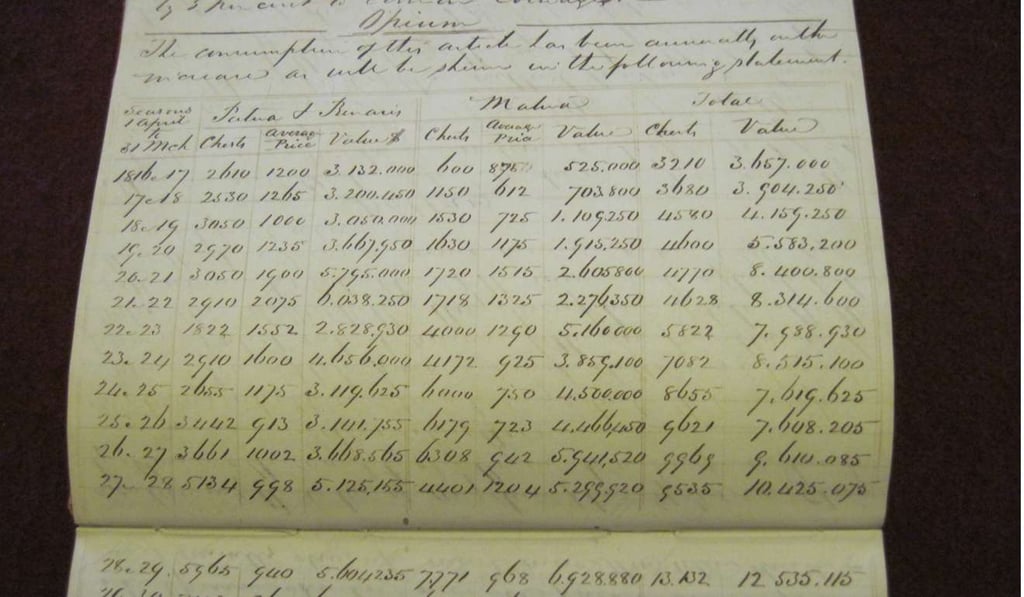
A page of a letter book belonging to John Perkins Cushing (1787-1862) documenting the opium trade in Canton, now Guangzhou, for Perkins & Company. Throughout much of history and certainly since the rise of the European seaborne empires, trade has been a key instrument of imperialism. Photo: Forbes House Museum