On the South China Sea, the US and Asean are increasingly on different pages
Mark Valencia says it’s becoming clear America’s concern for a rules-based order and freedom of navigation is not shared by a Southeast Asia more worried about the impact of a US-China power struggle on domestic stability

The article conflates, confuses and misrepresents US interests and Southeast Asian claimants’ interests. It lists US interests in the South China Sea as “defence of the rules-based order, preservation of regional security (including the safety of allies) and freedom of navigation”. I would add continuity of US domination of the region as the overall goal.
US to keep challenging Beijing’s claims to South China Sea, says navy commander
But the interests of the Southeast Asian claimants – Brunei, Indonesia, Malaysia, the Philippines and Vietnam – to features and maritime space in the South China Sea are quite different in kind and priority. Unlike the US, which has no territorial or jurisdictional claims in the area, they want to realise their sovereignty claims and access to maritime resources in what they consider their legitimate exclusive economic zones and beyond. But, more importantly, they want to avoid getting caught up and having to choose sides in the burgeoning competition and possible violent conflict between China and the US for pre-eminence in the region.
The US claims it is defending freedom of navigation. But the Southeast Asian claimants do not share the same concerns as the US on this issue. Of course, all the Southeast Asian countries – claimants and non-claimants alike – want and need the seas to be open and free for commerce. However, China has never threatened commercial navigation and is unlikely to do so in peacetime. Its economy depends on it as much.
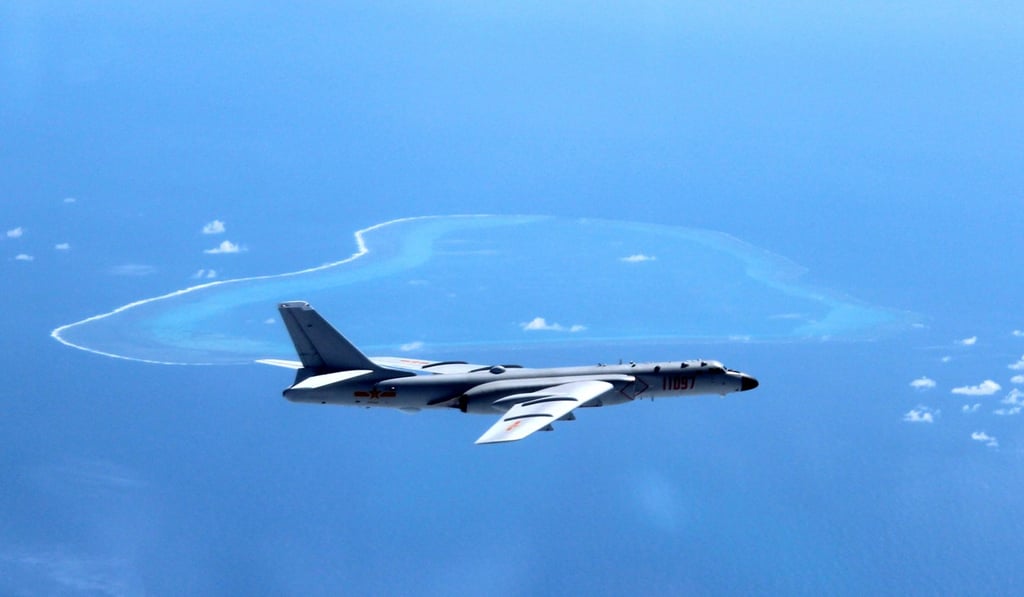
But the US purposely conflates freedom of commercial navigation with freedom to undertake military intelligence, surveillance and reconnaissance probes against China and others in the region. It then alleges that China’s interference with probes by these military vessels and aircraft in and over China’s exclusive economic zone violates freedom of navigation. But China argues that it is not challenging freedom of navigation itself but US abuse of this right by its military. US surveillance missions include active “tickling” of China’s coastal defences to provoke and observe a response, interference with shore-to-ship and submarine communications, and tracking China’s new nuclear submarines for potential targeting as they enter and exit their base. In China’s view, these are not passive intelligence collection activities usually tolerated by most states. Nor are these activities protected by the principle of “freedom of navigation”, because they are not uses of the ocean for only peaceful purposes as required by the UN Convention on the Law of the Sea.
China argues that it is not challenging freedom of navigation itself but US abuse of this right by its military