Advertisement

Western and Japanese snub of China’s belt and road summit is a missed opportunity

Jean-Pierre Lehmann laments the myopia of major Western economies and Japan in staying away from the Beijing-led initiative, whose vision of dynamic cooperation for shared prosperity deserves support

Reading Time:5 minutes
Why you can trust SCMP
Jean-Pierre Lehmann laments the myopia of major Western economies and Japan in staying away from the Beijing-led initiative, whose vision of dynamic cooperation for shared prosperity deserves support
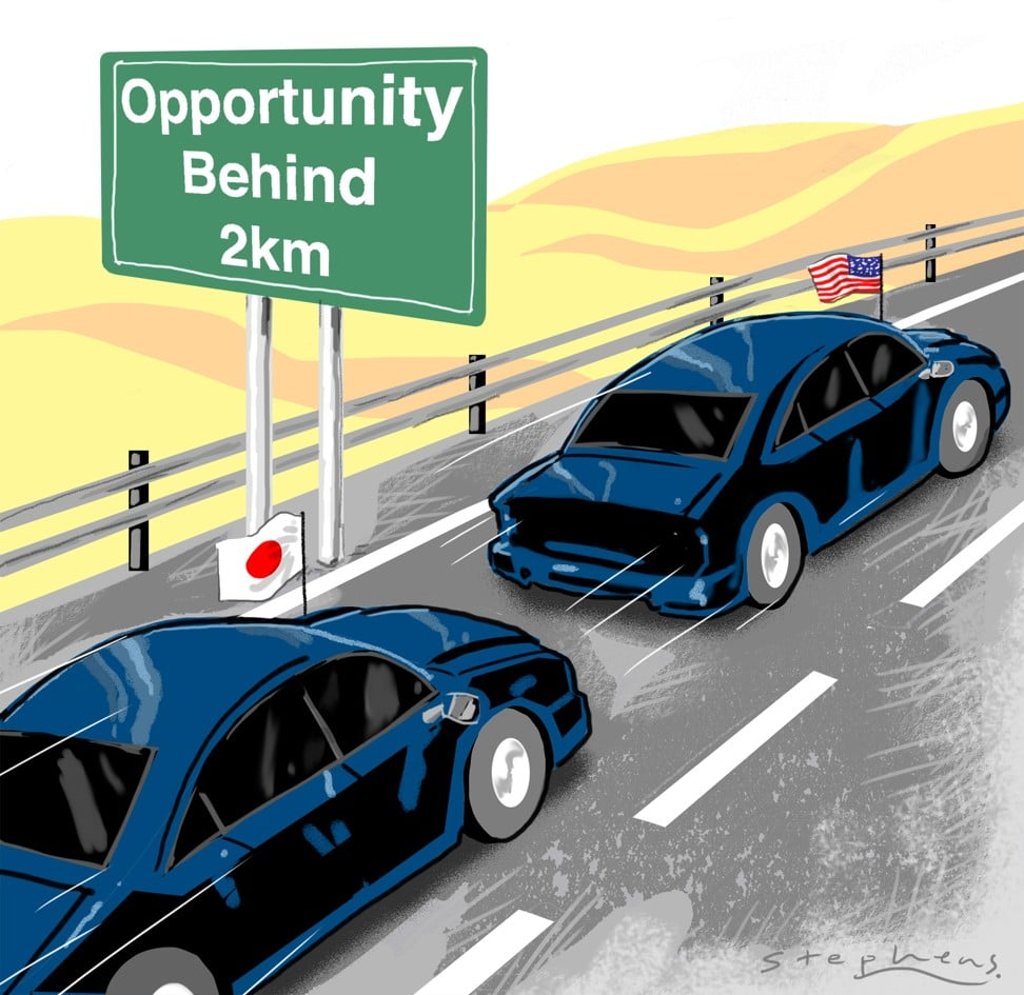
The potential benefits of the belt and road, if the dream were even only partly realised, could be enormous. Illustration: Craig Stephens
The conspicuous absence of the heads of state from the major Western economic powers and Japan at the belt and road summit this month in Beijing is a big mistake and a missed opportunity for enhancing dynamic and cooperative globalisation.

I live in Lausanne, Switzerland, which is well known among many Chinese as the city in which the International Olympic Committee is located. My flat is near the Olympic Museum and I often walk through the Olympic Museum Park down to the lake at weekends. I did this last Saturday and there were – as there have been ever since the Beijing Olympics – busloads of Chinese tourists. More people from China seem to visit the Olympic Museum than from any other country. This would have been unfathomable when I moved there in 1997.
It is, in fact, one of many illustrations of China’s most awesome achievement over recent decades: the lifting of hundreds of millions out of poverty and the creation of a vast new urban middle class. As The Economist recently noted: “In 1981, 88 per cent of Chinese (and 96 per cent of rural Chinese) lived below the poverty line; in 2013, only 2 per cent of Chinese were extremely poor.” That is worthy of respect and admiration. If only other poor countries, notably India, could achieve something even remotely comparable.
Advertisement
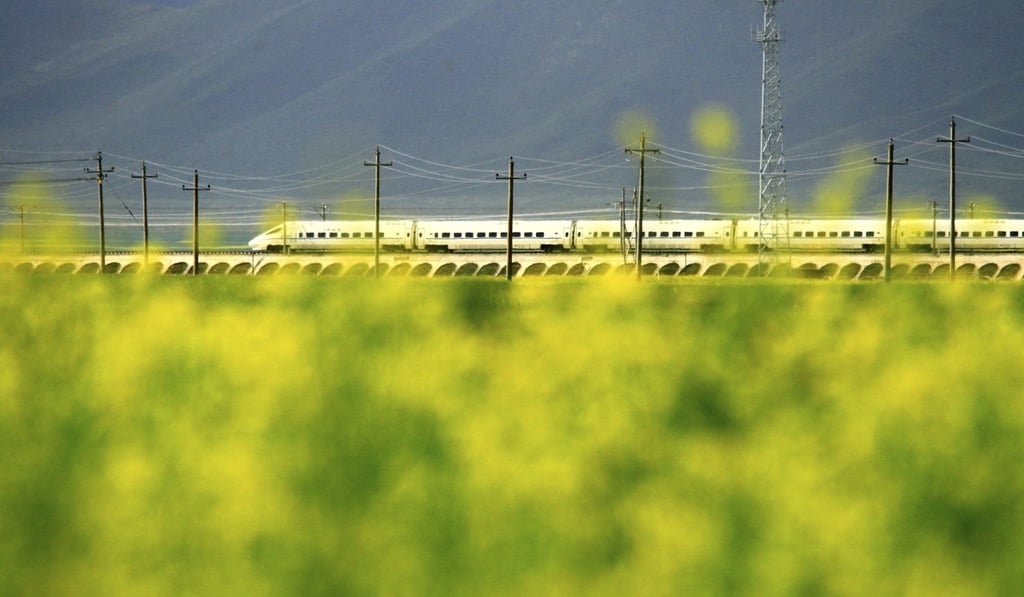
A train runs on the Lanxin high-speed railway in Shandan county, Zhangye city, in Gansu province. The 1,776km railway linking Lanzhou, capital of Gansu, and Urumqi, capital of the Xinjiang region, is one of the major passages for China's Belt and Road Initiative. In a span of mere decades, China has lifted hundreds of millions out of poverty and created a vast new urban middle class, an achievement worthy of respect and admiration. Photo: Xinhua

China’s achievement is all the more impressive in that it was not only unprecedented, but also unexpected. The often proclaimed “era of humiliation” – from the first opium war in 1839 to Liberation in 1949 – was no myth, but very much a reality. Though China was not colonised by any single power, as, say, India was by Britain, it was what Sun Yat-sen termed a “poly-colony” – ie, gang-raped.

The West and Japan should be conscious of the scars China has from the past exploitation and thus refrain from taking the hypocritical high ground

While the rising dragon is clearly no sweet pussycat, in comparison to other industrial powers – notably Britain, France, the US, the Soviet Union and Japan – it has been pacific. Thousands and thousands of Chinese come to visit the Louvre in Paris these days, to gape at the Mona Lisa and other masterpieces of art, not to pillage and burn it down as French troops (in cahoots with the British) did to the Summer Palace in Beijing. In 1950, the newly liberated People’s Republic of China invaded Tibet, which was reprehensible, but Britain also invaded Tibet (in 1903/04), not to mention the roughly half of the planet that was conquered and subjected by the empire. In its wars against China, Japan is estimated to have caused some 30 million deaths, along with multiple mutilations, tortures and rapes. I am not aware of a single Japanese killed by Chinese troops in the course of China’s recent rise.

Advertisement
Select Voice
Choose your listening speed
Get through articles 2x faster
1.25x
250 WPM
Slow
Average
Fast
1.25x