Donald Trump’s plan to play Russia against China is a fool’s errand
Alexander Gabuev says in its clumsy attempt to exploit the vulnerabilities of the Sino-Russian axis, the Trump administration misunderstands not only the strength of relations, but also its own desirability as a useful ally
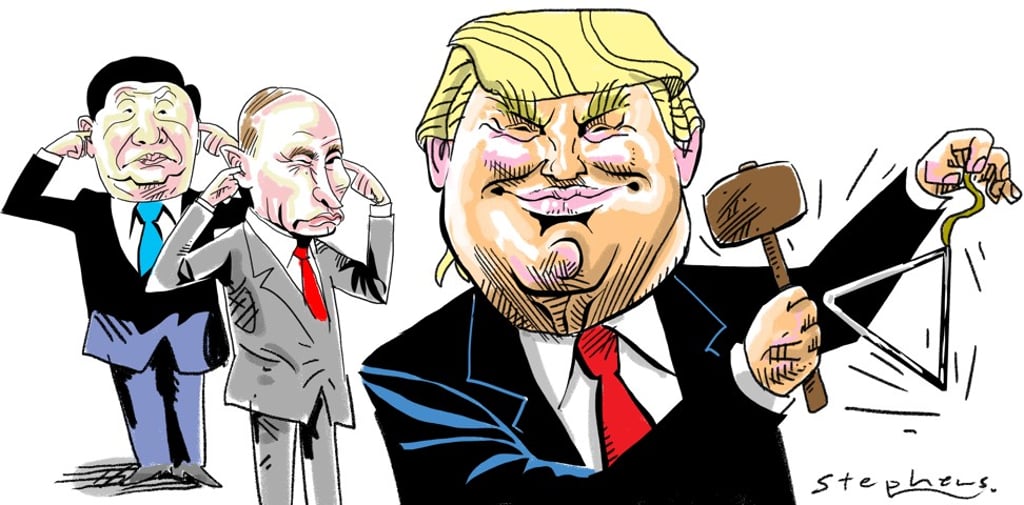
To all appearances, it seems that the Trump administration is trying to borrow a page from Henry Kissinger’s template of “triangular diplomacy” for managing relations with Russia and China. Illustration: Craig Stephens
Amid all the furore about US President Donald Trump’s handling of sensitive intelligence material during his recent meeting with Russian Foreign Minister Sergey Lavrov, one fundamental question remains unanswered: why is Trump going to so much trouble to patch things up with Moscow? For understandable reasons, most attention has focused on the ongoing investigation of ties between the Trump team and the Kremlin and Trump’s assertions on the campaign trail that he wanted to team up with the Kremlin to “knock the hell out of” Islamic State.
Yet there is another undercurrent at work: the perceived threat to US interests from a rising China. As Reuters reported recently, one of the key themes of high-level contacts between the Trump camp and Russian representatives was how to contain China. To all appearances, it seems that the Trump administration is trying to borrow a page from Henry Kissinger’s template of “triangular diplomacy” for managing relations with Russia and China. When Richard Nixon made his famous overture to China in 1972, the core idea was to position Washington in the beneficial corner of the triangle – that is, as the power that has better relations with the other two corners than they have between themselves.
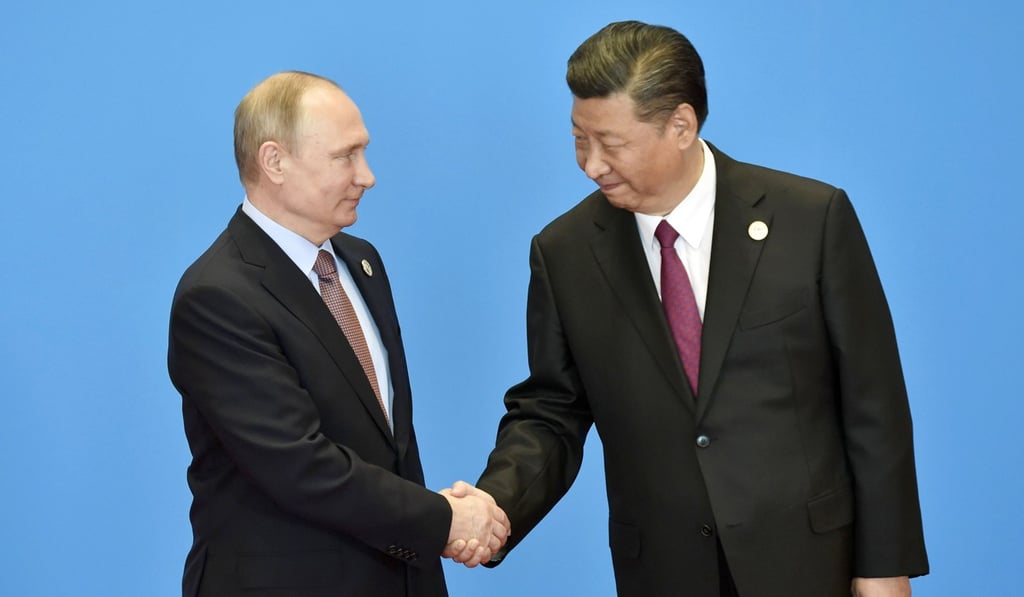
Russian President Vladimir Putin and his Chinese counterpart Xi Jinping shake hands in Beijing on May 15 during a summit on the Belt and Road Initiative. The Trump administration believes the bromance between the two is just a facade. Is it? Photo: Kyodo
Advertisement
For several of the armchair strategists who recently arrived in the White House, it appears that they believe now is an opportune moment for a concerted effort to disrupt the emerging axis between Beijing and Moscow. Such an approach, however, is based on deeply flawed assumptions about the key drivers behind the growing rapport between two powers.
Putin will not move a finger to harm the interests of China in order to pursue a long shot of mending ties with Trump
At first glance, it may seem logical to exploit the vulnerabilities of the Sino-Russian axis. Proponents argue that the bromance between Russian President Vladimir Putin and Chinese President Xi Jinping (習近平) is just a façade and that, deep down, the relationship is hampered by mutual mistrust. It is hard to miss Kremlin concerns about the asymmetries in its relationship with its powerful neighbour. Among these are imbalances between sparsely populated Siberia, and overpopulated regions just across the border. For decades, China has brazenly helped itself to sensitive Russian military technologies. Then there is Beijing’s rapidly growing influence in Central Asia, including through Xi’s Belt and Road Initiative. By playing on those fears and providing carrots to Putin, some of Trump’s advisers think that they can engineer a correction in Moscow’s approach on China.