Advertisement
Xi Jinping
Opinion

Five ways Xi Jinping and Shinzo Abe can join forces to power the Asian century

William Pesek says in a world continually rocked by the latest Trump tweet, China and Japan need to recognise the enormous opportunities for the two Asian powers and humanity at large, if their leaders can set aside differences

Reading Time:4 minutes
Why you can trust SCMP
William Pesek says in a world continually rocked by the latest Trump tweet, China and Japan need to recognise the enormous opportunities for the two Asian powers and humanity at large, if their leaders can set aside differences
William Pesek
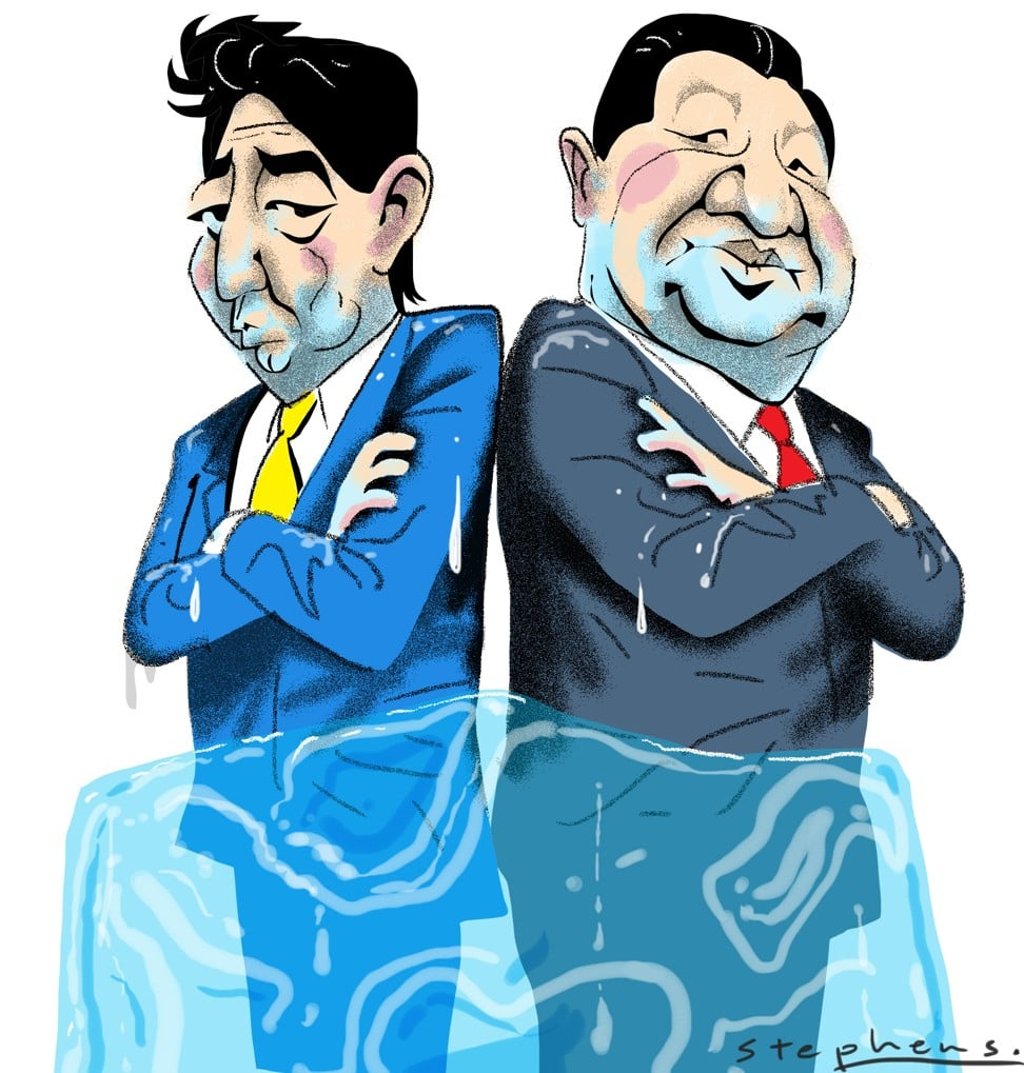
Anger over the distant past and today’s nationalistic imperatives make Abe and Xi relative strangers. The good news is that a diplomatic thaw may be afoot. Illustration: Craig Stephens
A paradox of this Asian century is the distance between the leaders of its two biggest powers. For all US President Donald Trump’s bluster and intrigue, he has already spent quality time at his Florida lair with both China’s Xi Jinping (習近平) and Japan’s Shinzo Abe. In 4½ years, President Xi and Prime Minister Abe have had, at most, a few fleeting exchanges on the sidelines of broader world summits.
Tokyo and Beijing should be joining forces to ensure the future is one of greater inclusion, stability and sustainability

This distance, apparently temperamental as well as physical, ­belies the enormous challenges and opportunities in Asia, relating to economic cooperation, security and environmental protection.
Tokyo and Beijing should be joining forces, not just to hasten growth but to ensure the future is one of greater inclusion, stability and sustainability. They should be spearheading Asia-wide free trade, linking bond and stock markets, harmonising accounting, tax and immigration norms, and devising diplomatic channels to ensure ­regional peace. Instead, anger over the distant past and today’s nationalistic imperatives make Abe and Xi relative strangers.
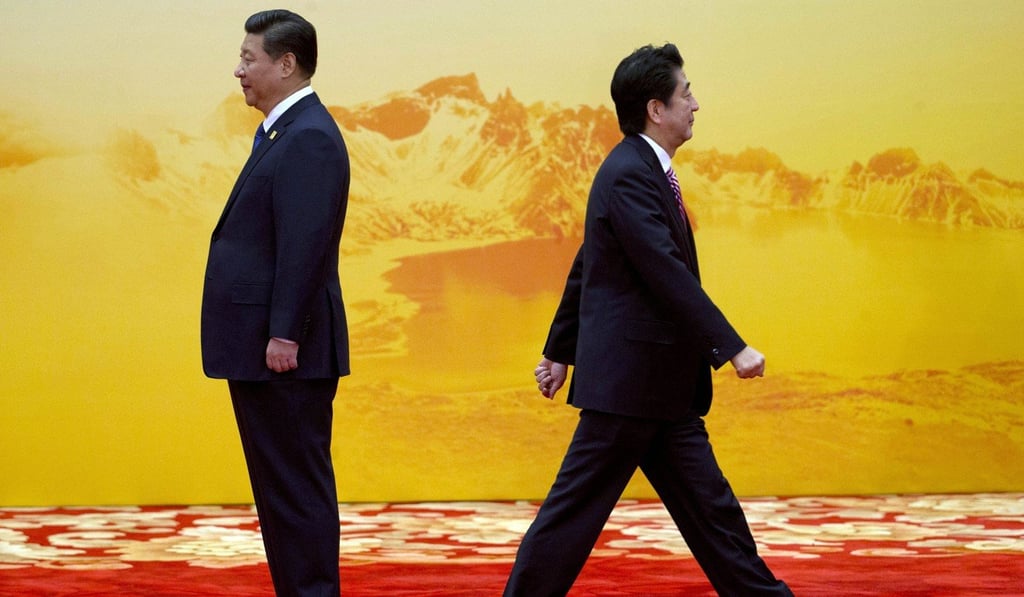
President Xi Jinping waits to welcome the next leader as Japan’s Prime Minister Shinzo Abe walks away at an Apec summit in Beijing, on November 11, 2014. Photo: AP

Xi Jinping tells Japanese PM Shinzo Abe that it’s time to move forward

The good news is that a diplomatic thaw may be afoot. Japan is proposing reciprocal summits that would see him visiting Beijing and Xi going to Tokyo. Abe’s team is targeting 2018, but isn’t ruling out an earlier encounter.

Advertisement

Here are five pressing topics Asia’s two big powers should tackle for the good of humankind.

First, TPP 2.0: pulling out of the Trans-Pacific Partnership was only half of one of Trump’s biggest blunders to date. The other: offering no alternative. Abe has since tried to get the other 10 members, including Australia, Canada and Singapore, to forge ahead without the US.

Advertisement

Trouble is, the absence of a giant economic engine makes it harder for the TPP to achieve lift-off. Why not ask Beijing to take Washington’s place? Not only would it give 11 ­nations greater access to the world’s No 2 economy, it would also nudge Xi to make China more of a stakeholder in global prosperity, and not just a shareholder. It would provide a framework for Abe and Xi to woo other developing economies in their orbit, creating something of an Asian community and so reduce the odds of an Asian currency war. As Trump veers toward protectionism, Xi says China will keep the globalisation flame alive. Resurrecting the TPP is Beijing’s chance to prove it.

How a 17th-century monk is boosting China-Japan ties

Advertisement
Select Voice
Choose your listening speed
Get through articles 2x faster
1.25x
250 WPM
Slow
Average
Fast
1.25x