Hong Kong people still need better social welfare protection
Law Chi-kwong says progress has been made in health care, social security, education, housing and labour in the past 20 years, but the government faces a number of challenges to improve people’s livelihoods


That income disparity is growing in Hong Kong is indisputable. The slow growth in real wages – less than 0.7 per cent on average a year over those 18 years – indicates a slow improvement in the living standards of the city’s working population.
Hong Kong has a small government, but few would disagree that sound social policies are important for society. So what progress, if any, have we made in social policies in the 20 years since the handover, and what might the future hold?
Social welfare sector sees HK$30 billion for elderly services and mentally ill
In health care, policymakers have been reactive in meeting the ever-greater challenges facing our health care system. Discussions on improving health care financing, including through a series of consultations since 1993, have not seen any real progress. Though the government concluded its study into a voluntary health insurance scheme in 2014, it took two years to decide to implement a non-legislative framework for such a scheme, hopefully by 2018.
The Sars epidemic was the biggest health challenge Hong Kong has faced in the past 50 years. It was both a curse and a blessing. Severe acute respiratory syndrome killed 299 people in Hong Kong alone, but the subsequent improvements in infection control in our health system have saved, and continue to save, thousands of lives every year.
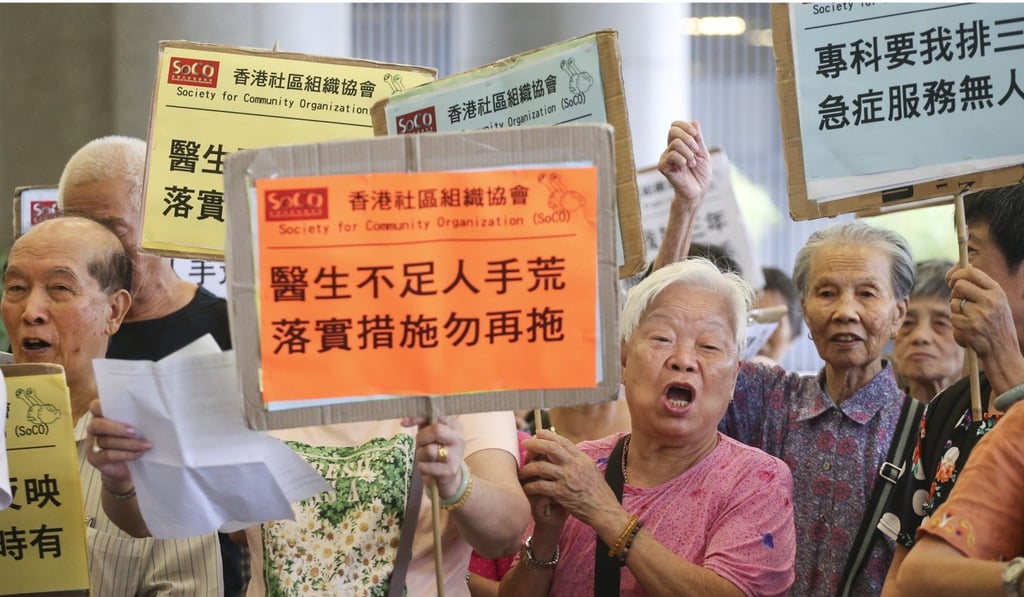
In the years to come, apart from the escalation of health care costs due to technological advancements and rising public expectations, our ageing population will also be a growing challenge. Better primary and secondary health care and improved coordination for health and welfare programmes would be the key strategic directions.