Time for Hong Kong’s power companies to lead the energy revolution for a sustainable city
Prashant Vaze says the Hong Kong government has been very generous to the two power giants thus far, and they can give back by encouraging customers to decarbonise and helping the city meet its 2030 climate goals

What has Hong Kong done to tackle climate change? Next to nothing
Previous SCAs largely failed to deliver. With the introduction of a feed-in tariff rebate, the new agreements could mark a turning point for renewable energy. The tariff encourages consumers to produce renewable energy. Power firms pay businesses and households that invest in solar a long-term, pre-announced price for the energy they generate. The Legislative Council environmental affairs panel last month discussed the government’s Climate Action Plan 2030+. Let’s set a renewable target: 10 per cent by 2030 so Hong Kong can inspire all with its resolve.
We need to meet our ‘climate ready’ goal of 26-36 per cent reduction in greenhouse gas emissions
Agreement has yet to be reached on the level of initial rebate the utilities will offer customers. It is time for a frank debate on who can benefit, what technologies are included and the process for applying. The government last week agreed with legislators and the WWF that the level of feed-in tariffs needs to be sufficient to reward investors, and agreed to publish information on how the rates will be set.
The government and power companies will no doubt be studying the feed-in tariff schemes in the UK, Germany and Taiwan, where rebates for small-scale rooftop solar installations were initially around three to four times the prevailing electricity tariff. These provided pioneer investors with the confidence to invest. Rates swiftly fell to below retail price as the industry matured. We know from our experience of installing solar panels in homes in Tai O that it would require a feed-in tariff rate of at least HK$4 per unit for a reasonable payback. It’s a fair rate to become Asia’s most sustainable city.
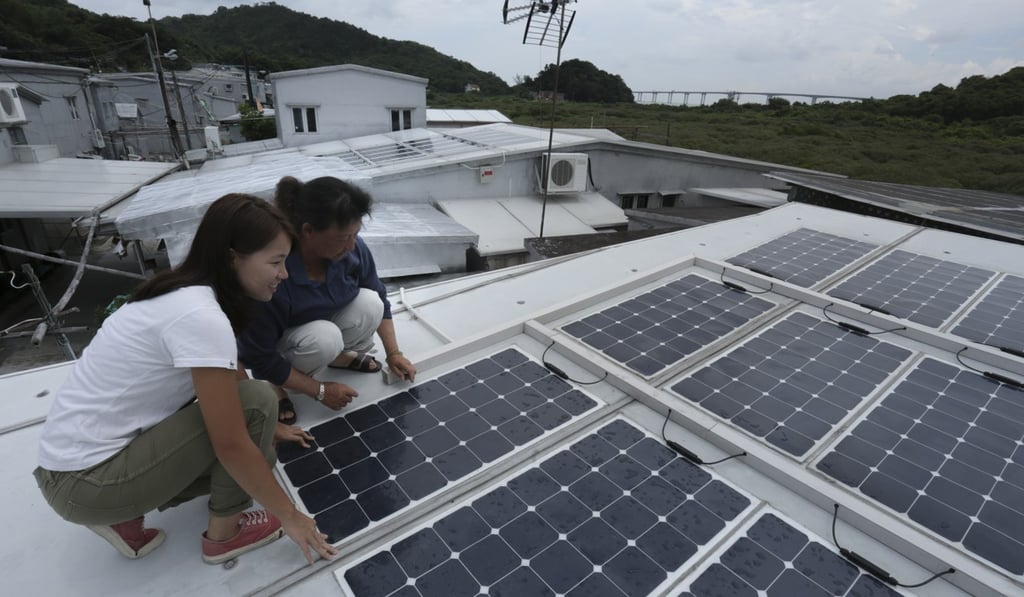
Tai O stilt homes to help prop up Hong Kong’s power grid with solar panel systems
Our study on the cost of Hong Kong adopting solar power shows introducing German or British style feed-in tariffs would, at worst, add HK$20 a month to consumers’ bills, if six per cent of the city’s power were supplied by small-scale solar. This could be absorbed by the power companies. The new SCAs also include a welcome innovation of setting up a system of renewable energy certificates that lets customers buy “green” power without having to install it. We can all join the solar revolution.