Hong Kong should make the best of being a low-fertility society
Paul Yip says high costs and changing social norms will keep Hong Kong stuck in a low fertility trap. Instead of focusing on trying to raise fertility rates, the city should also improve health, skills and education to meet the challenge

Is Hong Kong doomed to be a society of low birth rates and eventually declining population? Austrian demographer Wolfgang Lutz has put forward the hypothesis of a “low fertility trap” that illustrates the challenges we face. When fertility rates fall below a certain threshold, he says, it could be trapped at a level of around 1.2 children per woman, far below the replacement level of 2.1. This is not just due to the demographic transition of fewer marriages, but also the self-reinforcing changes in social attitudes towards family formation.
In Hong Kong, surveys show that the ideal family size is 1.6 children (that is, the number of children families want to have), while the total fertility rate is around 1.2 (the children they actually have). If the city’s youth aspire to have even fewer children, ideal family size will fall further, and so will the fertility rate.
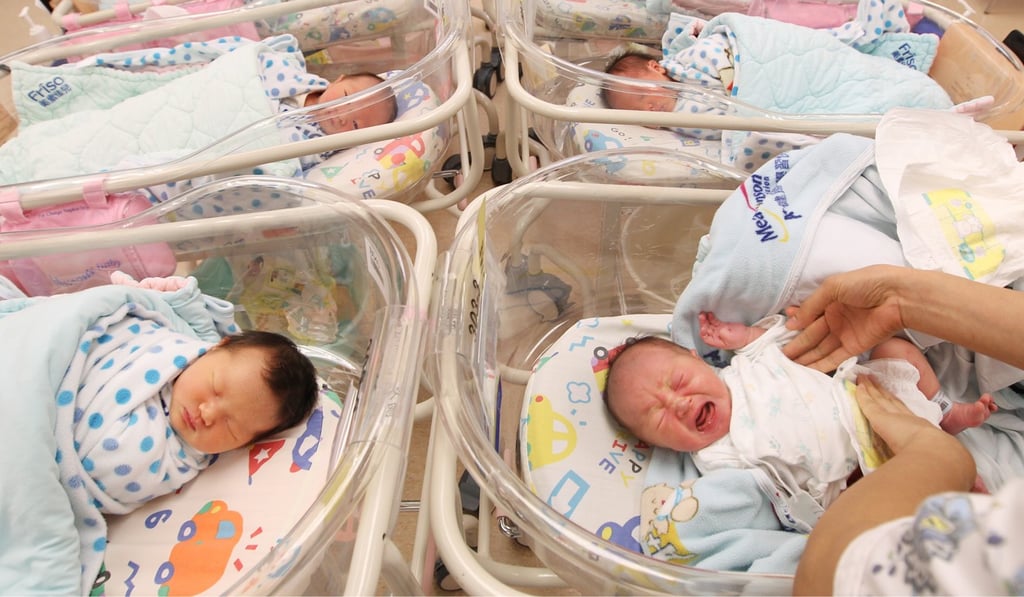
Baby dearth: why rich societies like Hong Kong are committing demographic suicide
For example, the Korean government provides universal free childcare services to parents, and spent more than 61 trillion won (HK$424 billion) from 2011-2015, with little impact on improving women’s labour participation rate and fertility rate. It is going to spend another 108.4 trillion won from 2016-2020. The universal childcare service welcomes these initiatives as mitigating the pressure of raising families, but there is still little impact in raising fertility rates.