How lifelong training can help save human jobs from robots in the tech age
Andrew Sheng says education technology, or edtech, is the best defence against worker redundancy in this age of accelerating new knowledge and the ‘open talent economy’, as traditional education falls short

Last week, my elder brother made a remark that shook my understanding of education: “I learn today more from YouTube than I have learnt all my life.”
The digital economy has arrived. My generation thought a good degree ensured a good job. But what use is formal education if Silicon Valley is no longer hiring on the basis of stellar Ivy League CVs, but on whether the jobseeker has written an app before or failed in the last start-up? Why invest a quarter of a million dollars on formal education, if a child can code and sell an app at 12 years old? The way new knowledge is accelerating, half the things a college student learns would be obsolete by the time they graduate.
Can Hong Kong keep up with the rise of the robots?
The biggest disruption of the digital economy relates to jobs and education. Karl Marx was not wrong in using the labour theory of value in understanding capital. But what the knowledge economy has done is digitised production, distribution and consumption into its micro-components, using artificial intelligence and machines.
Technology generates consumer surplus, but also a huge job deficit
A 2013 Deloitte review of the “open talent economy” explained it well. In the past, companies had to put jobs on their balance sheet, hiring the worker for almost life and providing for their pensions. The open talent economy can outsource jobs through the internet, so that 16 per cent of US jobs are now held by temporary workers or freelancers, up from 10 per cent a decade ago. The internet is the future employer and income generator.
What Uber and Airbnb have done is converted idle capacity in cars and housing to commercial value. But the biggest idle or underutilised capacity is human talent. Many people have jobs that use less than 1 per cent of their brainpower. Such mechanical jobs deserve to be robotised. But we also need a mindset change.
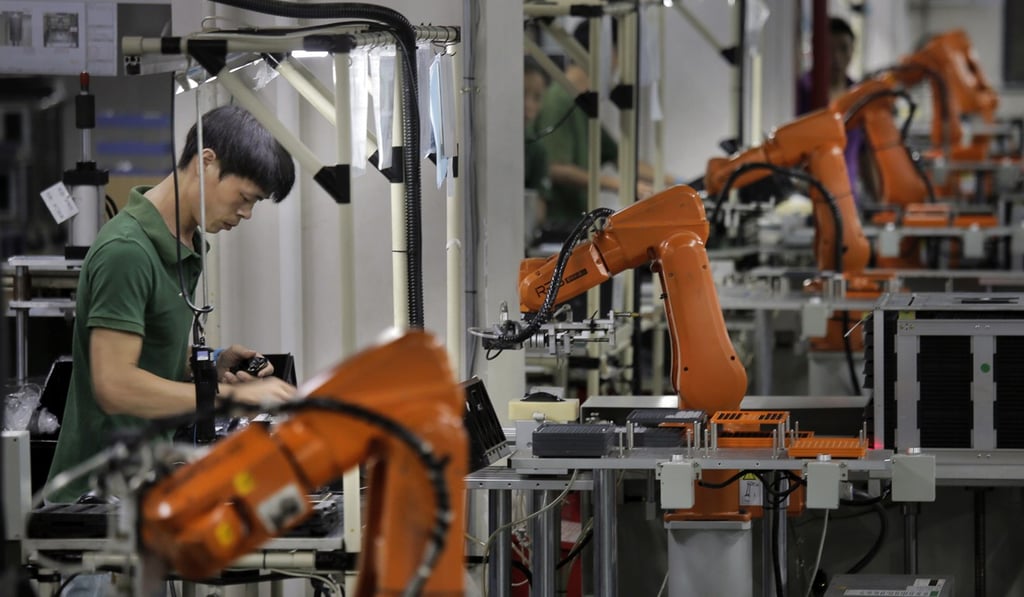
Chinese firm halves worker costs by hiring army of robots
A recent Economist article rightly pointed out that, “When education fails to keep pace with technology, the result is inequality”. While jobs for hi-tech fields are increasing, more than half of the present jobs can be completely robotised. Technology generates consumer surplus, but also a huge job deficit.