Advertisement
Can Yuriko Koike shake up Japan’s politics and energise economic reforms?
William Pesek says the Tokyo governor’s election challenge to Prime Minister Shinzo Abe could be a ‘Macron moment’ for Japan, as she seeks to upend the male-dominated status quo and modernise the economy
Reading Time:3 minutes
Why you can trust SCMP

Depending on who you ask, Yuriko Koike is either Japan’s answer to Hillary Clinton or Emmanuel Macron. Clinton comparisons stem from Tokyo’s first female governor running the most convincing national leadership campaign by someone outside the patriarchy Japan has ever seen. But the analogy to the French president is more intriguing amid the shifting realities of the snap election Prime Minister Shinzo Abe called for October 22.
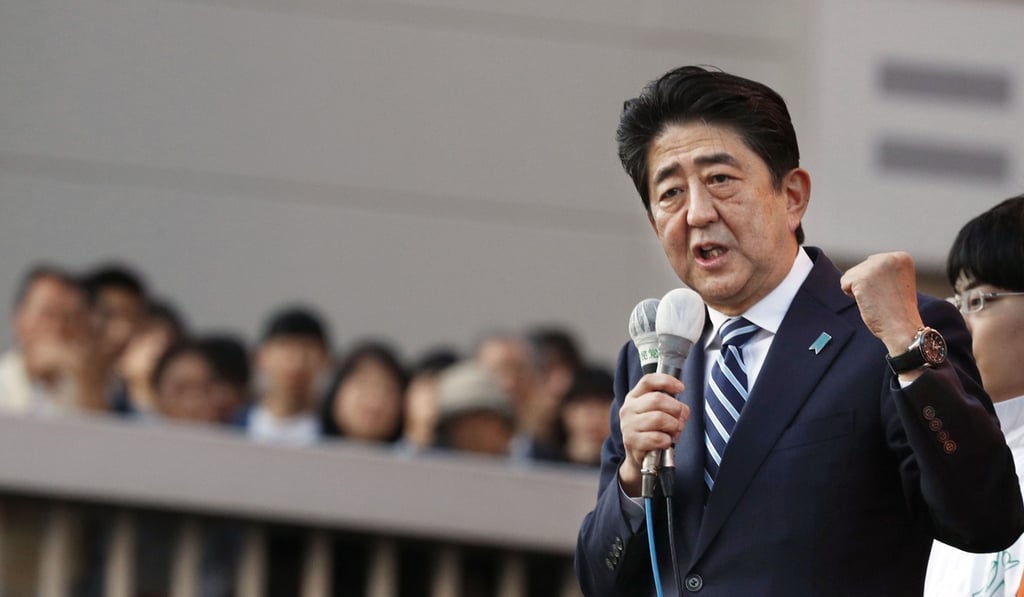
‘It’s bad news for Abe’: Japan’s reformed, realigned opposition could yet create headaches for prime minister in snap election
Three weeks ago, Abe having trouble clinging to power seemed unthinkable. Enter Koike who, like Macron, formed a new party, has the charisma to attract her pick of members and upended politics in short order. Abe’s poor reading of the electorate casts him in the role of British Prime Minister Theresa May, who made the same blunder in June. It gives Koike’s Party of Hope a shot at unseating Abe’s Liberal Democratic Party and invigorating Japan’s economic reform process.
Advertisement
Amid the spin and hype surrounding Abenomics, it’s easy to miss how little Abe has accomplished since December 2012. Yes, the Nikkei 225 average is on the up, Japan is having its best run of growth in 11 years and business confidence is at a 10-year high. But the raison d’être of Abenomics – ending deflation to give Japanese workers a raise – has been a raid, a point Koike makes early and often. Japan’s revival is aimed at the 1 per cent. It’s making the wealthy richer, leaving average households looking for an alternative.
Abenomics has three phases, but only the initial two were implemented: aggressive Bank of Japan easing and fiscal loosening. The most important phase – structural upgrades – was largely put on the back burner once growth returned. Even the scheme’s successes like tighter corporate governance helped shareholders over workers. Efforts to pull more women into the labour force, meanwhile, actually undermined wages, as most are only getting “non-regular” jobs that pay less.
How much of a disruptor is Koike in Japanese politics?
October 22 could be a game-changer. Japanese elections tend to change nothing. But the Koike effect is different. If Abe clings to power, her challenge is likely to catalyse him to loosen labour markets, increase innovation and productivity, cut red tape, engineer a start-up boom and modernise the tax system. Abe’s cronyism scandals and tin ear to what voters crave caught up with his approval ratings, the highest of which are 40 per cent. Koike’s threat is the wake-up call for Japan to shift focus from a weak yen and corporate welfare to modernising the economy.
Advertisement
Advertisement
Select Voice
Choose your listening speed
Get through articles 2x faster
1.25x
250 WPM
Slow
Average
Fast
1.25x