Advertisement
In wealthy Hong Kong, new children’s commission must address poverty
Grenville Cross says the upcoming children’s commission must be independent. It needs a broad portfolio to fulfil UN obligations, and to address the reason many children are held back: living conditions
3-MIN READ3-MIN

Although Chief Executive Carrie Lam Cheng Yuet-ngor says a children’s commission will be created in 2018, it is too early to celebrate. Some fear the commission will lack real clout. The United Nations Committee on the Rights of the Child has called on Hong Kong to establish “an independent mechanism specifically to monitor the implementation of government policy in relation to the rights of the child”, and independence is key.
Although the commission needs to work in partnership with the government, it must not be beholden to it. When a commission is too close to government, its members feel muzzled, and reluctant to hold authorities to account.
The new commission’s portfolio must be wide, encompassing our international commitments. The UN Convention on the Rights of the Child applies to Hong Kong, and includes the right to a standard of living adequate for the child’s physical, mental, spiritual, moral and social development.
Advertisement
In November, Chief Secretary Matthew Cheung Kin-chung disclosed that after “recurrent cash policy intervention”, the poor population rose to 995,800 persons in 2016 – up 25,000 since 2015 – with an overall poverty rate of 14.7 per cent. The Hong Kong Poverty Situation Reports show that in 2015, approximately 180,000 children, or 18 per cent of the total child population, lived in poverty, although this declined slightly to 17.2 per cent in 2016.
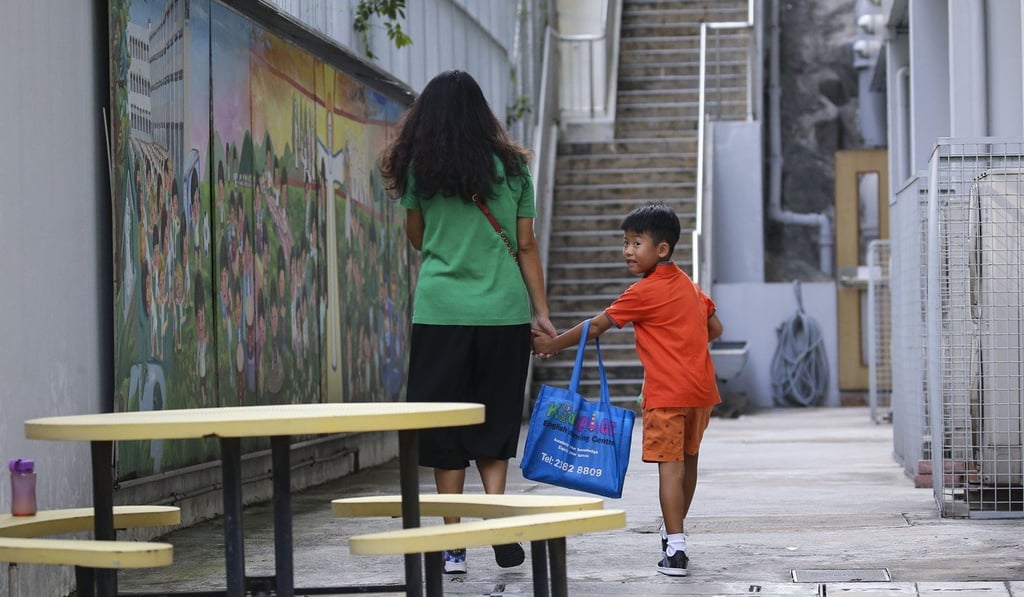
How to break the cycle of child poverty in Hong Kong, where one in five children are poor
Children growing up in deprived circumstances can be handicapped for life. The Alliance for Children Development Rights’ survey of 206 families earning an average of HK$13,462 a month – the poverty line for a family of four being HK$16,400 – revealed that many low-income families lacked basic dietary, clothing and living necessities. Whereas 45 per cent of families said their children had only one school uniform, another 40 per cent relied on used clothing. There was also a general lack of toys, books and computers, hindering educational development.
Advertisement
Advertisement
Select Voice
Select Speed
1.00x