Advertisement
Bitcoin bubble embodies our bipolar year of optimism and doubt
Andrew Sheng says cryptocurrency has some clear vulnerabilities that make its current highs temporary, but before the coming market correction, optimistic traders will carry on as they did before the 2008 global financial crisis
Reading Time:3 minutes
Why you can trust SCMP

As 2017 draws to a close, the breaking out of the champagne to celebrate the US tax cuts and the record stock market prices suggest that bubbles will continue into 2018. In hindsight, 2017 was a most exciting year for its “bipolar” nature. Anyone who has lived with a bipolar personality would recognise that a high makes one feel they are walking on clouds, but the lows feel very, very low.
There was hardly a dull moment with President Donald Trump’s tweets changing long-standing policies by the minute. From withdrawing from the Trans-Pacific Partnership and Paris climate accord to calling the North Korean leader “rocket man”, nothing could be more divisive than making Jerusalem the location for the US embassy for Israel.
Brexit ended the year looking like the departing wife has to pay a huge sum for the divorce, keeping a back door (common Irish border) open for sneaking into the family house. And there is no doubt that when the far right won 13 per cent of the votes in the German elections, polarisation in Europe on how to handle immigration will be its primary threat.
Advertisement
Through all the geopolitical stresses and strains, the global financial markets sailed through 2017 by creating record highs, ignoring any fear that the central banks would reverse their unconventional monetary policies. Indeed, the biggest surprise winner in terms of returns is bitcoin, which started the year at US$1,000 or so, and last traded at US$18,000. According to Investopedia, if you bought US$100 worth of bitcoin on January 1, 2011, you would be worth more than US$3.7 million at the end of this November.
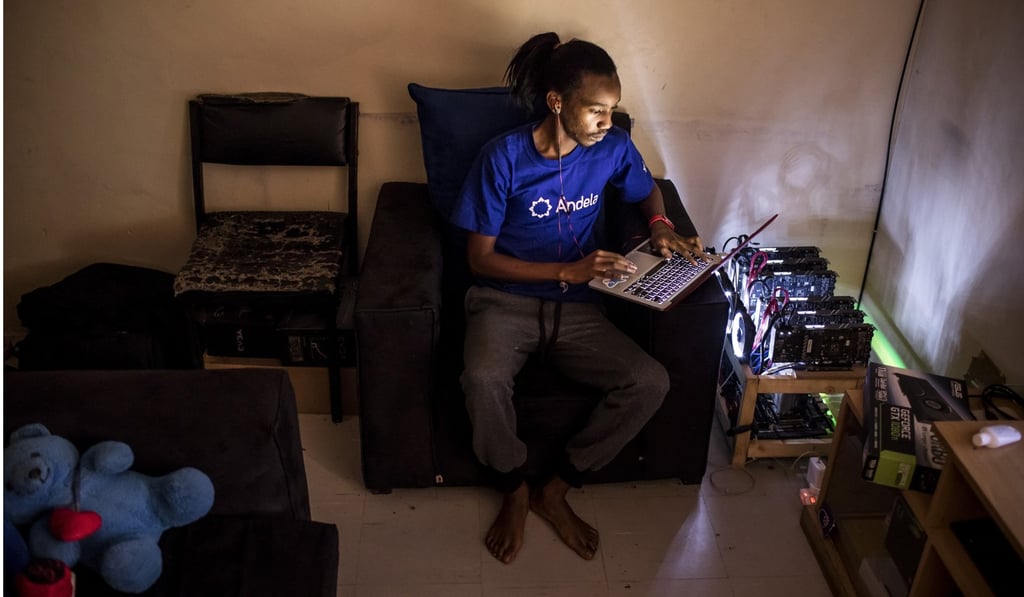
Goldman Sachs planning to establish a trading desk for cryptocurrencies, including bitcoin
This is a bubble far worse than the South Sea Bubble of 1720. I am amazed at how sanguine central bankers and financial regulators are on how easily innocent investors in cybercurrencies can be taken to the cleaners in this bubble. Most retail investors do not realise that cybercurrency has no intrinsic value, and it is not anyone’s liability, with no custodian or central register. So when someone tells you your cybercurrency has “disappeared” due to hacking or fraud, the cybercurrency investor has no legal protection at all. According to Bloomberg, roughly 1,000 key players own up to 40 per cent of bitcoin, so no one can check whether the prices and liquidity are subject to manipulation. If you cannot crack blockchain and trace who is doing what, how can any regulator find who is responsible for what?
Advertisement
Select Voice
Choose your listening speed
Get through articles 2x faster
1.25x
250 WPM
Slow
Average
Fast
1.25x