Doklam stand-off with China: will India learn the right lessons or pay as Nehru did?
Zhou Bo says if today’s India insists it is not the India of 1962, it should remember that China, too, is not the same. Triumphalism, mixed with adventurism, on border disputes could cost India dearly, as it did the Nehru government

It won’t be easy for China and India to draw some common lessons. Beijing and Delhi disagree even on the length of the border: China maintains it is 2,000km while India holds it is 3,488km, including disputed areas in Jammu and Kashmir and Arunachal Pradesh.
The Line of Actual Control in the border areas is not verified. And, without a clear idea of the alignment, patrolling troops sometimes end up entering an area perceived by the other side to be its own “territory”. But the Doklam stand-off was a different story. China and India have no territorial dispute in Doklam, which Beijing believes is Chinese territory and India believes is Bhutanese territory.
Delhi referred to the 2007 India-Bhutan Friendship Treaty as the raison d’être for sending troops into Doklam. But the treaty only states that the two countries “shall cooperate closely ... on issues relating to their national interests”. There is no clear invitation from the Bhutanese government to the Indian side for military assistance.
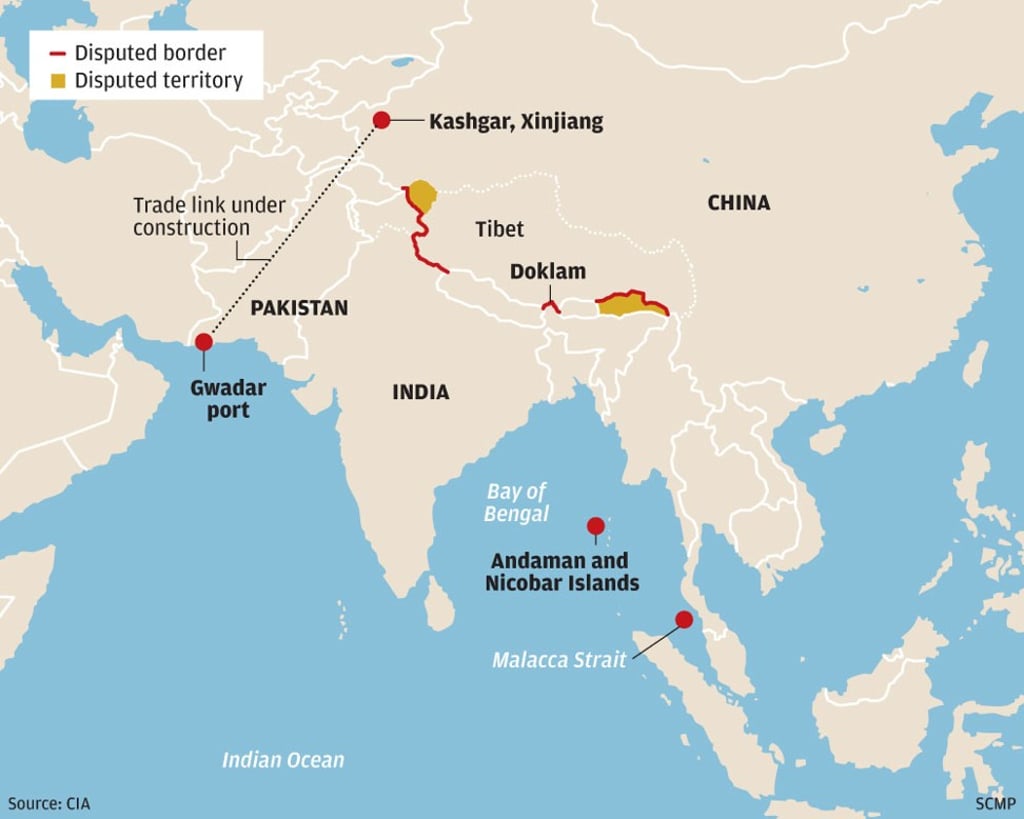
The most talked about reason for Delhi’s intervention was its fear that, if China controlled the Siliguri corridor “chicken’s neck”, a thin strip of land just south of Doklam, it would cut off India from its northeastern states, including Arunachal Pradesh – over which China claims sovereignty. But the incident may have occurred against the backdrop of India’s strong sense of hopelessness in the face of China’s growing economic and military influence in the Indian Ocean and its hallucination of being encircled by China.