As Asean chair, Singapore may find its warming ties with China turning frosty once more
Mark J. Valencia says however skilled its diplomacy, the challenge of trying to forge a code of conduct agreement between Asean and Beijing, while keeping its relations with both China and the US on an even keel, may prove too much for the Southeast Asian country

Some think Singapore is well positioned to balance, hedge and manoeuvre between the two powers on behalf of Asean. This may be so. But the job will be very difficult and failure may have longer-term adverse effects on Singapore’s relations with one or the other – or even both. Moreover, its reputation for balance and diplomatic skill may be tarnished.
China is concerned that Singapore will try to “internationalise” the South China Sea issues, which Beijing wants confined to the countries directly involved. The US wants the issue settled peacefully, according to the existing international rules and the UN Convention on the Law of the Sea. More to the point, Asean itself is split on the issues and is likely to remain so, despite Singapore’s best efforts to forge unity vis-à-vis that of China.
With Singapore in the hot seat, the stakes are high for Asean
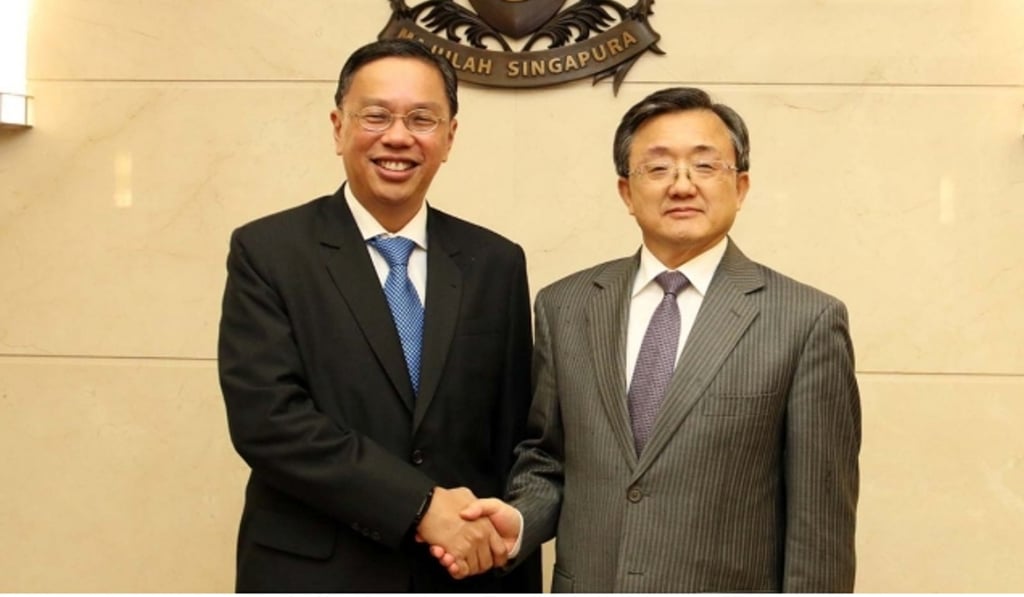
Blow-by-blow account of the China-Singapore spat over Global Times’ South China Sea report
It has become increasingly difficult for Singapore to argue that it is neutral between China and the US on the South China Sea. As part of an“enhanced defence relationship”, it hosts top-of-the-line littoral combat ships from the US as well as its P-8A intelligence, surveillance and reconnaissance planes, which track China’s submarines. China occasionally intercepts US spy planes with jet fighters in what the U|S calls an “unsafe” manner.