Advertisement
A police state in Xinjiang in which moderate voices are silenced is not what China needs to achieve stability
Roseann Rife says the region has became a testing ground for China’s most oppressive security policies but vilifying certain ethnic groups and drowning out moderate viewpoints will not lead to a peaceful nation
3-MIN READ3-MIN

Four years ago this week, the renowned Uygur economist Ilham Tohti was detained by Chinese authorities and eventually sentenced to life in prison for separatism. Commentators predicted that the authorities intended to initiate a severe crackdown in the Xinjiang Uygur autonomous region to head off growing ethnic tensions and silence moderate voices. They were right; the region is now a virtual police state.
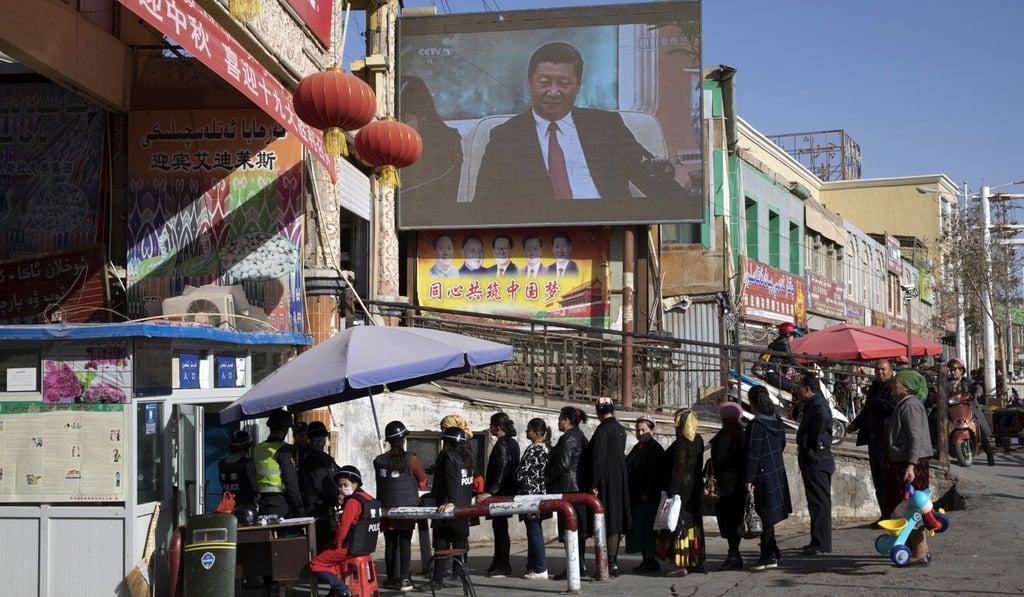
Today’s Xinjiang is characterised by omnipresent police surveillance, overflowing detention facilities, advanced technological monitoring, heavily armed street patrols, ubiquitous security checkpoints and intrusive policies violating human rights.
Since the 1980s, the Uygurs – a mainly Muslim, Turkic ethnic group – have been the target of persecution, including arbitrary imprisonment, incommunicado detention, and restrictions on rights and religious freedom. After Chen Quanguo became the region’s party chief two years ago, Xinjiang became a testing ground for some of the most oppressive security policies seen in China in recent years.
Advertisement
Journalists tell of several checkpoints on roads, metal detectors at entrances to parks and random street checks of mobile phones to ensure a new mobile security app has been installed. The authorities have taken surveillance to new levels using DNA, biometrics and face recognition. The big data platform Police Cloud aggregates and analyses all kinds of information to track groups that threaten “social stability”.
How questioning China’s security crackdown in Xinjiang led to a 20-year jail term
Thought police create climate of fear in China’s tense Xinjiang region
The authorities have also doubled down on Uygurs practising their religion. Revisions to the Regulation on Religious Affairs endorsed in 2017 codify state control over all aspects of religious practice but in March, a “de-extremification regulation” was announced in Xinjiang that clearly targets Muslims. “Extremist” behaviour includes wearing of “abnormal beards”, refusing to smoke and not selling alcohol during the Islamic holy month of Ramadan. New regulations even forbid the use of Islamic names for newborns.
Advertisement
Select Voice
Select Speed
1.00x