Advertisement
The Philippines
Opinion

Another term for Duterte? That could spell economic doom for the Philippines

William Pesek says the Philippine president’s media clampdown is part of a larger trend of economic and democratic backsliding that should concern investors, especially as rumours swirl that he may seek to stay in office post 2022

Reading Time:3 minutes
Why you can trust SCMP
President Rodrigo Duterte admires a portrait of himself at the presidential palace in Manila. Photo: EPA-EFE
William Pesek
The Duterte era in the Philippines had one of its darkest days on Monday when the president’s men shut down a media outlet critical of his policies. That’s saying a lot for a 565-day tenure generating more headlines for body bags than steady leadership. Along with Rodrigo Duterte’s bloody drug war, dark moments include him claiming to have killed someone as a teenager, his son being accused of ties to drug smugglers, calling Barack Obama a “son of a whore”, and threatening to expel global credit-rating agencies. Manila revoking Rappler’s media licence adds to the ways in which Philippine democracy is under threat.

But the real peril may be yet to come: Duterte is moving to extend his six-year term, set to end in 2022.

It won’t happen, insist the president’s men. Earlier this month, though, senate president Aquilino Pimentel vocalised a risk many Filipinos feared: “We can extend the president’s term if really necessary and if he is amenable to it.” Minority leader Franklin Drilon called it an “immoral proposition” and said the “cat is out of the bag!”

Advertisement
Admittedly, this “cat” has made news before. Speculation was rampant in 2014 about then-president Benigno Aquino staying on for a second term. At the time, the idea gained traction among reformists. His term whipped the national balance sheet into shape, attacked graft and won Manila investment-grade ratings. Even so, I argued that one term was enough. Extending his reign, many worried, would dent Manila’s democratic progress.

Duterte’s successor? Philippines top cop known as ‘Bato’ hints at run for presidency
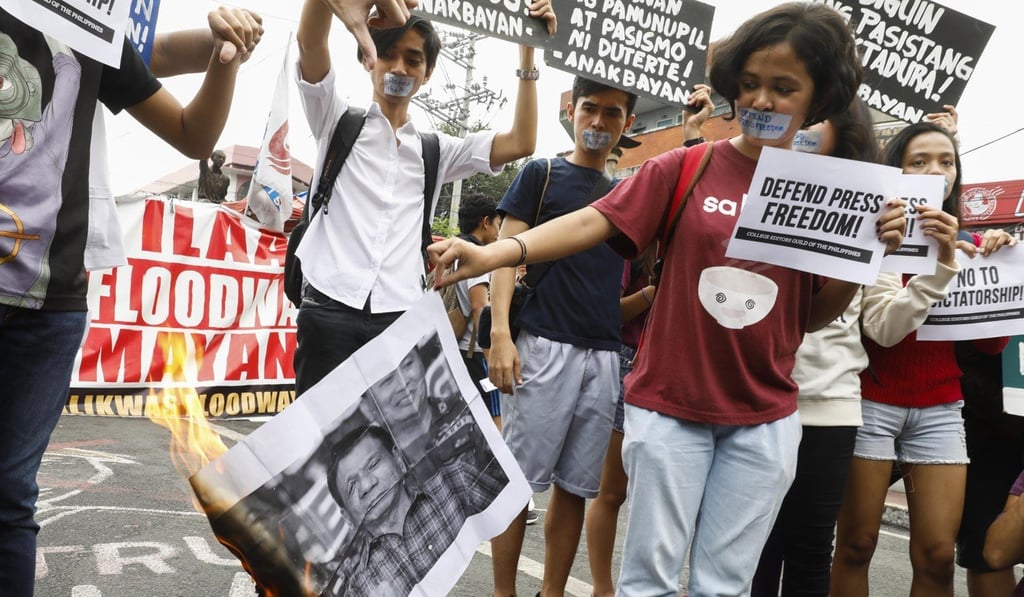
Protesters burn an image of President Rodrigo Duterte during a demonstration against the withdrawal of media portal Rappler’s licence. Photo: EPA-EFE
Ironically, Duterte is doing just that, day after day. In May 2017, he declared martial law in the southern third of the country ostensibly to quell Islamic-State-linked militants. By September, Duterte’s defence secretary was dropping hints of nationwide clampdowns. Human rights activists said it echoed the bad old Ferdinand Marcos days, a comparison Duterte courted by cosying up to the Marcos family.
Staying on indefinitely, prioritising a drug war over big foreign investments that create jobs and higher living standards? Investors should pay close attention to that risk

Duterte’s media clampdown is a chilling piece of a bigger mosaic of economic and democratic backsliding. Like US President Donald Trump, Duterte is riding high on a booming economy. Thanks to Aquino’s heavy lifting and buoyant global demand, the Philippines grew about 6.7 per cent in 2017.

Advertisement
Select Voice
Choose your listening speed
Get through articles 2x faster
1.25x
250 WPM
Slow
Average
Fast
1.25x