Advertisement

As China and the Vatican make peace, will a reconciliation between official and underground churches follow?

Christine Loh says the agreement on the appointment of Catholic bishops satisfies both church and state, but unifying the official and underground church will be more challenging

Reading Time:3 minutes
Why you can trust SCMP
Members of the congregation clean an unofficial Catholic church in Hebei province, after a Sunday service in December 2016. Photo: Reuters
The Vatican and Beijing broke ties in 1951, for Marxist-Leninists should be atheists. But after some 40 years of discussions, a breakthrough about the appointment of bishops to represent the church in mainland China has been reached. A formal agreement is expected to be concluded soon.
There are understandable rumblings of discontent among Catholics that it would be wrong for Beijing to have any say in religious matters, that there should be a clear separation of church and state. In Hong Kong, our faith is a private matter and the government has no say. Here, Rome appoints Catholic bishops and that is as it should be.

On the mainland, the ruling party superintends the foundations of power, including in religious affairs. Beijing’s concern has been that there should be no alternative source that can influence the people, which it sees as a potential risk to political and social stability. The tussle between the Vatican and Beijing has to be seen against this background.

Keeping the faith with Chinese characteristics: state-run Catholicism turns 60

In the earlier days of communist rule, the party closed churches, locked up priests and repressed believers. More recently, the government has allowed state-sanctioned churches and appointed bishops. The estimated number of Catholics on the mainland is about 10 million today.
Advertisement

The issue is whether it is better to have an agreement with Beijing and whether the terms are good enough to meet the interests of the church. The crux of the agreement is understood to have two key aspects: the government would nominate bishops but Rome’s approval of the candidates would be necessary before consecration can take place.
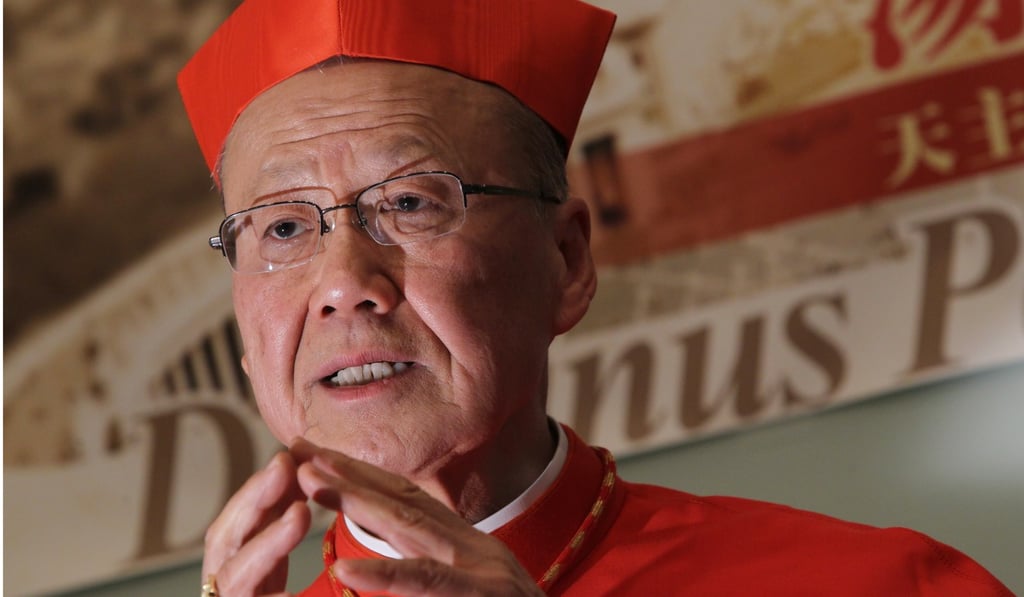
Cardinal John Tong says the agreement between China and the Vatican paves the way for the gradual unification of official and underground churches. Photo: K.Y. Cheng
In releasing the news that the Vatican and Beijing had reached an initial consensus on the appointment of bishops in 2017, Hong Kong’s cardinal John Tong Hon stressed two points. First, there would no longer be “the crisis of a division between the open and underground” Catholic churches in China, and the officially approved and underground churches could gradually be reconciled. Second, Tong stressed that the Vatican and Beijing have “different interests”. Beijing is concerned with “problems on the political level”, while the Vatican is concerned with faith and pastoral work. Their interests had to be addressed to the satisfaction of both before any agreement could be reached.

Can the Catholic faith serve politics? That’s what China wants

For the Vatican, consecration must have papal approval or it would be regarded as breaking away from the church. An agreement where the government has a nominating role but Rome’s approval is necessary would mean that the consecrated bishops would not only have Beijing’s recognition but they would also be in communion with Rome. For the Vatican, candidates for bishop must preach according to the Catholic faith. The process of nomination satisfies Beijing that it has political control while Rome’s approval satisfies the church that it can do God’s work.

Advertisement
Select Voice
Choose your listening speed
Get through articles 2x faster
1.25x
250 WPM
Slow
Average
Fast
1.25x