Advertisement
Ethnic minorities in Hong Kong
Opinion

Hong Kong must see its young ethnic minorities as an asset, not a liability

Alfred Chan says with an increasing number of ethnic minority youth born here who are more comfortable with the Chinese language than their parents, Hong Kong should redouble its efforts to remove the obstacles they face in finding employment

Reading Time:4 minutes
Why you can trust SCMP
Between 2011 and 2016, the poverty rate for ethnic minorities increased, and is higher than the rate for the general population. The government must act to break the cycle of poverty. Illustration: Craig Stephens
Alfred C. M. Chan
As we approach another International Day for the Elimination of Racial Discrimination, it is a good time to take stock of the racial landscape in Hong Kong.
Though still predominantly homogenous, the demographic mix in Hong Kong has seen an increase in the number of non-Chinese in the past 10 years. According to the 2016 population by-census, the number of ethnic minorities increased significantly, by 70.8 per cent, over the past 10 years, with increases owing to the higher numbers of Filipino and Indonesian domestic workers, followed by South Asians and whites. Ethnic minorities now make up 8 per cent of the total population and 3.6 per cent of the population not including foreign domestic workers.

An interesting characteristic of the ethnic minority population is that the median age is lower than that of the whole population by 7.2 years.

I look at these statistics in a positive light. Many of these ethnic minority youth consider Hong Kong their only home. A lot of them were born here and/or have spent most of their lives in Hong Kong, a fact reflected in the 115 per cent increase – from 38,042 in 2006 to 81,964 in 2016 – in the number of ethnic minorities born here.

Advertisement

Another interesting finding is related to their Cantonese language skills. In 2016, 64.3 per cent of ethnic minorities aged 5-14 were able to read Chinese, although the level of their reading skills is still lower than that of their ethnic Chinese peers. Yet, this is significant, given that language is the biggest barrier for many ethnic minorities in employment and higher education.

With the younger generation better placed to overcome this barrier, it is imperative that they get all the support they need to join the workforce on an equal footing. Currently, many ethnic minorities only know the basics of Chinese, which many employers consider inadequate.

Ethnic minority children should get to learn Chinese in Mandarin, rather than Cantonese
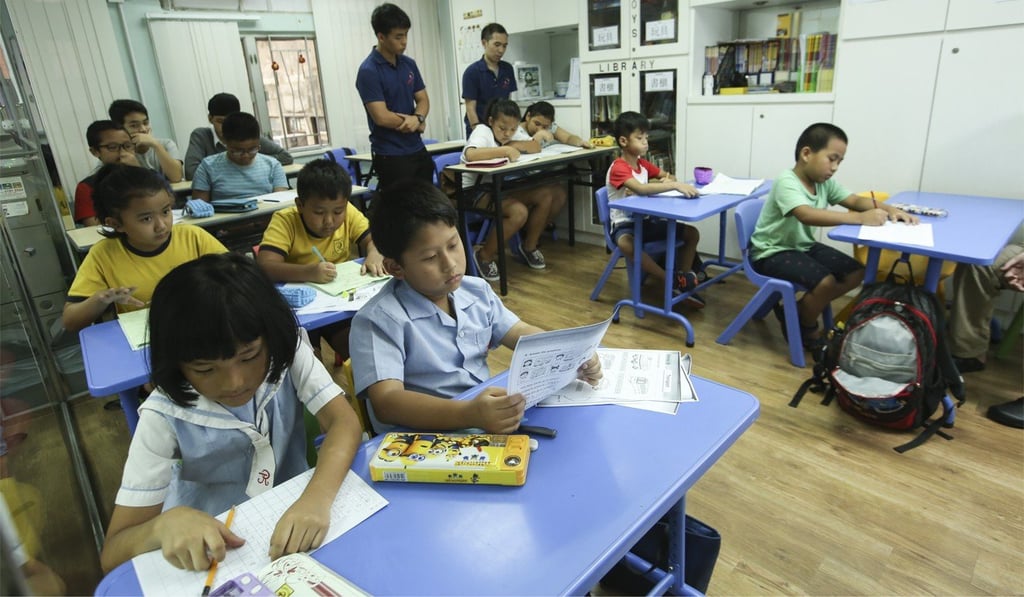
Ethnic minority children complete their homework with help from an education centre in Jordan. They should get all the support they need to join the workforce on an equal footing. Photo: Edmond So
Advertisement
Select Voice
Choose your listening speed
Get through articles 2x faster
1.25x
250 WPM
Slow
Average
Fast
1.25x